Search Results
Search this site
1779 results found with an empty search
- Scorpions - Taken by Force
On December 4, 1977 “Scorpions” released their fifth studio album “Taken by Force”. What erupted from the band that winter was far more than just another record. “Taken by Force” captured the moment when the raw, exploratory spirit of the early years collided with the sharper, harder, and more melodic identity that would soon define “Scorpions” on the world stage. It is an album forged through tension, shaped by evolution, and ignited by creativity. By the time the group entered the studio, they had already traveled through several musical phases. The atmospheric mysticism of “Fly to the Rainbow” , the emotional focus of “In Trance” , and the sharper aggression of “Virgin Killer” had all hinted at a shift in direction. Inside the band, that transformation was accelerating. Klaus Meine and Rudolf Schenker were steering the group toward a heavier, more powerful hard-rock approach, while Uli Jon Roth leaned deeper into spiritual, expressive, and free-flowing guitar artistry. This creative friction is the pulse of “Taken by Force”. Producer Dieter Dierks pushed the band toward precision, conviction, and louder impact. His approach began shaping the sound that would later turn “Scorpions” into arena giants. Roth, on the other hand, poured color, atmosphere, and emotional fire into every solo. The clash between these two visions gave the album its heat, its energy, and its unmistakable identity. The album opens with “Steamrock Fever” , a fast, sharp, electrifying statement that the band was ready for the world’s biggest stages. It is confident, direct, and built with arena instincts the band had yet to fully realize. “We’ll Burn the Sky” elevates the record into soaring emotional territory. Meine’s voice reaches dramatic heights while Roth’s guitar adds depth and longing, turning the track into one of the album’s most moving moments. The lyrics were initially a poem by Monika Dannemann, the last Jimi Hendrix girlfriend as a tribute to him after he's death. The urgency within the band’s dynamic comes through in “I’ve Got to Be Free” , a track that reflects personal struggle and artistic independence. It’s tense, restless, and driven by conviction. Then comes the album’s crown jewel: “The Sails of Charon” . A dark, exotic riff. A haunting atmosphere. A guitar solo that inspired an entire generation of metal and neoclassical players. This is Uli Jon Roth at his absolute peak, and one of the defining guitar moments of the 1970s. The song was covered by "Testament" on their compilation album "Signs of Chaos" (1997) and Yngwie Malmsteen cover album "Inspiration" (1996). “He’s a Woman, She’s a Man” delivers the opposite side of the band’s evolving identity — fast, heavy, aggressive, and filled with the attitude Rudolf Schenker would soon weaponize on upcoming releases like “Lovedrive” . The album closes with “Born to Touch Your Feelings” , a heartfelt ballad shaped by atmosphere and emotion. It foreshadows the melodic instincts that would later bring “Scorpions” some of their greatest worldwide successes. The album cover for “Taken by Force” was photographed by Michael von Gimbut, his third collaboration with “Scorpions”. Like the previous two album covers, it sparked controversy and was replaced in many countries with a safer alternative featuring band photos . The original artwork showed children playing with guns in a military cemetery in France, which some viewers found offensive. Upon release, “Taken by Force” did not yet propel the band to global superstardom, but it signaled the end of one era and the beginning of another. It would become the final Scorpions studio album with Uli Jon Roth , whose departure made way for the classic lineup that would go on to dominate the 1980s. For Listening: Spotify , Apple Music "Face/Off" - Israel's Rock Blog Follow us on Facebook / Instagram or Subscribe to our website
- Unleash the Archers – Phantoma
Written By: Noam Asulin Release Date - 10.5.2024 "Unleash the Archers" have always known how to create albums that are not just "albums", but also tell a story. Concept albums are something the band has been doing for a long time and with great success, like they did with their forth album " Apex " for example. "Phantoma" is a concept album that deals with today’s hottest topic: "AI". I personally have a problem with themes about AI, futurism, robots, the question whether humanity will be replaced by machines, etc. I will always prefer words that focus on more rational things. According to Brittney Slayes who sings the clean vocals, the band received quite a bit of criticism for choosing to integrate AI into the album creation process and into their video clips. Unlike previous albums, the new album incorporates synthesizers, something that shows the band’s intention to progress to a more modern sound. The album tells the story of "Phantoma", an AI entity that moves from the world of screens, where everything seems perfect, to the “reality” world that is revealed to her as a lie compared to what she thought. The album starts with " Human Era ", at a relatively slow pace with vivid imagery of a desolate, wind-blown future world, then surges forward into the relentless, high-speed intensity of a power metal stronghold. Brittney is amazing on this album, maybe her best vocals ever. In this song, Phantoma goes out into the world and wants to meet the other side, "humanity". Phantoma feels she deserves more, that she was not meant to be inside a computer, but rather outside with humanity. She feels she can achieve more from her life and searches within herself to understand who she is in the world of humanity. The song slowly picks up a faster tempo and very much reminds me of the band’s previous material. Brittney reaches very impressive heights here. The song has quite a few synthesizers and a wonderful solo. In my opinion it is one of the best songs on the album specially due to the intensity it delivers. " Ph4/NT0mA " comes right after with a tour de force of intertwined guitar solos and soaring, agile vocals, rooted in traditional heavy and power metal influences. The song "Buried in Code" continues with fast tempo. It kicks things off with thunderous rhythms and lives a blazing a trail. In this song, Phantoma is ready to leave for a better future. Then the album takes a darker turn on the heavy metal powerhouse " The Collective ," where Brittney Slayes’ rich vocals challenge the listener to either join the cause or step aside!. In the song " Green and Glass ", Phantoma discovers that humanity is not what she thought and that it is not perfect, and cracks begin to appear. The solo has a vibe of "Trivium" and indeed Brittney mentioned that they were inspired by them. In the song " Gods Of Decay ", Phantoma tries to save humanity from "the collective", the army of the world she came from, but humanity laughs at her. She realizes that it is not the humanity she used to love, and that there is no one to save. This song shows another changes of style the band decided to make with an upbeat '80s flavor . A more poppy song, slower, softer, but still, in my opinion, one of the best songs on the album. It has a catchy and memorable chorus that made me listen to it again and again. The solo is simply wonderful and boost the song up. The song " Give It Up Or Give It All " is one of the songs where the band went the furthest from their signature style, with a beautiful anthem ballad. The song starts with keys and continues with arpeggio guitar as the tempo slightly intensifies, when Phantoma discovers that she is alone. Both her world and human's world disappoint her. Everything is different from what she thought. In my opinion, the tempo of the song corresponds with plot where Phantoma needs to understand what she must do, like the quiet before the storm of emotions she is about to feel. In the moody " Ghosts in the Mist ", the war between humanity and machines began, the one Phantoma tried to warn humanity from. In the soaring and menacing " Seeking Vengeance ", Phantoma wants to take revenge on humanity, and she shows no mercy. She shows who she really is and becomes merciless and uninhibited. This song is very reminiscent of " Apex " and "Abyss" and the bass line at the beginning is fantastic, making me wish that the bass playing would have more presence on the mix. The album ends up with the bittersweet " Blood Empress ", where Phantoma understands who she has become. She comes to terms with who she is and even proud of it. The song starts with a distorted AI voice of Brittney as Phantoma says "I’m not a human nor a machine". This song is a kind of catharsis, the climax of the story. In my opinion, this is also one of the best songs on the album, with the pre-chorus being the strongest part. In summary, I have always loved the band’s concept albums, and "Phantoma" is not exceptional. It seems that a lot of thought has been invested in the album creation process and there is no doubt that Brittney is a great part of the plot and concept. The production is good, the solos are interesting, and the drums are wonderful, but that’s not enough. Brittney said they were influenced by many bands during the creation process and wanted to incorporate a more poppy sound instead of making the same power album again. Although I understand the desire to evolve, I wasn't into it. A fast tempo and a sound that causes endorphins to fill the brain is what I love in this band's style, but it is less evident in this album. Although the change in sound and style, "UTA" fans will surely enjoy this album, but in my opinion it is only a "Good" album that is slightly disappoint me, compared to what the band has released so far. For Listening: Spotify , Apple Music "Face/Off" - Israel's Rock Blog Follow us on Facebook / Instagram or Subscribe to our website
- Pool Kids - Pool Kids
Written By: Noam Asulin Release date - 22.7.2022 (Photo: Kay Dargen) "Pool Kids" is an indie/alternative band from Tallahassee, Florida. The band includes four members. Christine Goodwyne (guitar, vocals), Andrew Anaya (guitar), Nicolette Alvarez (bass), and Caden Clinton (drums). The eponymous "Pool kids", is the band's second album, while the debut album "Music To Practice Safe Sex To" was released in 2018. Before I tell you what I think about the album, I want to focus on the cover for a moment. Some of you surely remember the experience of flipping through the record shelves, when suddenly an interesting cover catches your eye and makes you want to listen to it even though you don't even know the artist. How many albums and artists did you get to know this way, just because the cover intrigued you? For me too, the cover is the first impression, when I go to listen to an album of a band I don't know. If the cover is interesting enough to me, I'll listen to the album, even if it's an artist I don't know or a genre I don't usually listen to. In this case, I really liked the cover. The rainbow on the blue background and the minimalistic design was very interesting, caught my attention, and made me interested and curious about the musical material inside. But, in this case, "the cover" did not really indicate "the inside". In my opinion, this is a fairly average album that has only some gems in it. If the whole album sounded like these gems I could say that this is an amazing album, but unfortunately, this is not the case. If we consider the songs as a whole, most of them are quite tiresome to the ear. For me, indie is not an easy genre to listen to, but I think that in this case it could have been made much more accessible and this album would have sounded much better (as was done, for example, in the last album of "Wolf Alice" - "Blue Weekend"). As mentioned, there are some gems in this album. The first track " Conscious Uncoupling " is surprising and gives hope for a fun and kicking album. A rock song with an even more interesting C-Part. The rockish and energetic "I Hope You're Right" and " Swallow " also continue in the same direction and are really wonderful, but unfortunately this is where it ends. Every time I listened to the album I felt as if I was forced to continue to listen to it. The songs, for the most part, are just not interesting enough, not kicking enough, and feel a bit monotonous to me. The non-monotonous songs are actually the best songs on the album and it's a shame that there are only three of them. In conclusion, despite the disappointing feeling I was left with, I'm still very curious to know what "Pool Kids" members will bring to their next album, hopefully, more songs like the three pearls I mentioned above. For Listening: Deezer , Apple Music , Spotify , YouTube Music "Face/Off" - Israel's Rock Blog Follow us on Facebook / Instagram or Subscribe to our website
- My Bloody Valentine - Loveless
Written By: Moti Kupfer Release date - 4.11.91 In the early 2000s, the Norwegian band called "Kings of Convenience" released the album "Quiet Is the New Loud". It's not certain if this was the "Kings of Convenience"'s answer to what had happened a decade before them, but you can never know. A decade before, noise and distortion alongside heavenly voices were the ones that became particularly popular thanks to the Irish band "My Bloody Valentine" and their groundbreaking second album "Loveless", which was released on 04.11.1991. "My Bloody Valentine" was formed in Dublin, Ireland in 1983 by Kevin Shields (vocals, guitar, sampler), and Colm Ó Cíosóig (drums, sampler). Four years later, the full line-up was completed with the addition of Bilinda Butcher (vocals, guitar), and Debbie Googe (bass guitar). In 1988, the band was signed by the record label "Creation" and towards the end of that year they released their first full-length album "Isn't Anything". In all three years that passed until the next album, the band continued to work and record EPs, but there is no doubt that "Creation" did not believe that the next album by "MBV" would also be their last album with the company, and their last for more than twenty years. From five days to almost two years! How does it happen that the recording of a studio album takes so long? They traveled through no fewer than nineteen recording engineers and recording studios, the band's inability to achieve the sound they were aiming for created a gap between what Alan McGee's Creation label was aiming for and what was available. The end result was an album that defined the Shoegaze subgenre at its best. But it didn't help "My Bloody Valentine" stay signed to "Creation", as Alan McGee dumped them after the album cost him a quarter of a million pounds. "Creation" in the early nineties was a fairly small and poor indie label, the "MBV" adventure nearly cost "Creation" its bankruptcy, and cost band leader Kevin Shields his sanity, later on. The sound that Kevin Shields, the band's leader, aimed for was a dirty, noisy sound on the one hand, and a live performance sound on the other. He combined aggression with tenderness, between cascades of distortion and angelic singing voices, between experimental and noisy sounds and simple, beautiful melodies. Shields was greatly influenced by guitarists Johnny Ramone, Poison Ivy ("The Cramps"), Ron Asheton ("The Stooges"), and Bob Mould from the American punk rock band "Hüsker Dü". Through an interview with Bob Mould, he discovered Yamaha's Reverse Reverb pedal effect. An effect that takes the sound of one guitar and produces the sound of several guitars together, an expressive sound. That famous pedal would later define the music of "My Bloody Valentine" as "Shoegaze", since during live performance they would look down towards the pedal, which would create the illusion of looking towards their shoes to avoid interacting with the audience. The loud sound of "My Bloody Valentine" was heavily influenced by bands like "Sonic Youth" and "Dinosaur Jr.", a sound that did not seek to flatter the listener. Unlike most of the world, he integrated the vocals into the mix along with the instruments and not above the instruments. Similar to "Cocteau Twins," the lyrics on the album have less meaning, and they are mainly about relationships and sexuality. The singing style actually has meaning, and what's more, Shields and Butcher's vocals were recorded on two channels, one regular and one mumbled. In the mix, the two channels were combined together when the volume on the mumbled channel was turned up, creating a kind of mysterious and sweet ghost song. In "Loveless," we get a lot of vague, heavy love. From the moment we press Play, we enter a state of thick fog that is actually a dream but right in the middle of reality. On one album, Kevin Shields managed to bridge the mid-1980s noise-pop of "Jesus and Mary Chain" with the dream pop of the "Cocteau Twins", with his heavy use of that pedal creating a genre new for the British press, a genre they disparagingly called shoegaze. But, in the US it helped to brand shoegaze as a new and charming genre that later spawned bands like the "Smashing Pumpkins". In real time, the album reached only number 24 on the UK album charts, selling only 100,000 copies. Can you call this a chart failure for an album that naturally wasn't aiming there? Not sure. What is certain is that it was "My Bloody Valentine's" swan song for many years. For Listening: Apple Music "Face/Off" - Israel's Rock Blog Follow us on Facebook / Instagram or Subscribe to our website
- Bryan Adams - Reckless
Written By: Moti Kupfer Release date - 5.11.1984 It was the summer of 1984. Bryan Adams was in New York, working on his next album, "Reckless," which was released on November 5, 1984. After his breakthrough with "Cuts Like a Knife," he felt he had to "strike while the iron was hot". Adams and his producer Bob Clearmountain were at the famous "Power Station" recording studio in Manhattan. They were in the final stages of recording, nine tracks had already been recorded at "Little Mountain Sound" in Vancouver, the Canadian city where Adams had lived since he was a teenager. Now they were putting the finishing touches on it, adding vocal overdubs. But while Clearmountain was happy with the result, Adams felt it wasn't perfect. His instincts told him they needed something more, but he couldn't pinpoint what was missing, and he was also tired. He decided to invite his manager Bruce Allen to New York to listen to the album. Allen responded immediately with the question: "Where's the Rock?" According to Adams, Allen's question changed everything. The next day, he was on a plane back to Vancouver, and he called Jim Vallance, his songwriter and partner, and said, "We need to turn up the volume on the songs." With his manager's words still ringing in his head, Adams chose two re-recorded songs, " One Night Love Affair " and " Summer Of '69 ." In addition, he and Vallance wrote a new song that answered Bruce Allen's question in the most definitive way. They called this song " Kids Wanna Rock ." Adams was born on November 5, 1959 (he celebrates his birthday with the album) in Kingston, Ontario, to an English couple who emigrated from the city of Plymouth to Canada in the 1950s. His father was an officer at the Royal Military Academy Sandhurst in the British Army, and joined the Canadian Army, and later worked as an observer for the United Nations, and as a diplomat for the Canadian Foreign Service. As part of his last assignment, the family emigrated to Austria, Portugal, and Israel, where Adams attended the Scottish School in Jaffa, in the early 1970s. By 1974 they had returned to Canada, without his father who was stationed overseas. Adams bought his first electric guitar at the age of 10 in Reading. An Italian brand from Gherson, based on a Fender Stratocaster. He dropped out of school to play in a band called "Shock" and used the money his parents had saved for college to buy a grand piano. He began working in the Vancouver music scene with bands and as a session singer. At the age of 15, he became the lead singer of the glam rock band "Sweeney Todd", replacing original vocalist Nick Gilder. In 1978, Adams met the musician who would change his life, Jim Vallance, who became his writing partner. They met through a mutual friend at a Vancouver instrument store. Vallance was the former drummer and primary songwriter for the Vancouver rock band "Prism". Shortly before meeting Adams, he had left the band to focus on a career as a session musician and songwriter. They met at Vallance's home studio a few days later. This became the beginning of a fruitful partnership that lasted throughout the 1980s. Together they wrote for Adams, and for other artists, including "Kiss", Johnny Hallyday, Bonnie Tyler, Bonnie Raitt, "Loverboy", Rod Stewart , Carly Simon, Neil Diamond, and more. When Adams reflected on the earliest stages of creating "Reckless," he claimed he had no strategy. "I wish I could say I had a game plan,” he laughs, “but I didn't. I was just trying to keep the ball rolling, trying to pay the bills. That was all I was trying to do." Adams never claimed to be the next Dylan , nor did he make any sociopolitical statements like Bruce Springsteen . In truth, Adams was as much a working-class hero as The Boss, except that Adams didn't make it his appearance. "For me," he says, "there was no message, no attempt to be a man of the people. "I was just trying to write great songs." Before the duo began writing the songs for "Reckless," they already had several songs in development, including the ballad " Heaven ," which was originally recorded for the flop film "A Night In Heaven." The song was inspired by "Journey's" hit "Faithfully." Midway through the recording session, drummer Mickey Curry, who had warned Adams of his limited availability that day, announced that he had to leave because he had a prior commitment to a session with Hall & Oates. Adams called "Journey" drummer Steve Smith, who happened to be in New York at the time and he filled in for Curry. Producer Jimmy Iovine thought the song was not right for the album, and advised Adams not to include it, but Adams eventually managed to change his mind. Another song that was ready early on was " Run to You ", which Adams and Vallance had originally written for "Blue Oyster Cult", and even its opening riff was very reminiscent of their huge hit "Don't Fear (The Reaper)". After the band rejected the song, Adams decided to record it himself. The video was directed by Steve Barron, who had worked on most of Adams' videos at the time. Barron had directed Michael Jackson's video for "Billie Jean", and also directed videos for "Culture Club" and "Tears for Fears". The video was nominated for five MTV Video Music Awards. British Eurodance band "Rage" reached number 3 in the UK charts (1992) with their cover of the song. " Somebody ," which became the second single from the album, was written by Vallance and Adams about relationships and World War I, from their perspective. "Adams and I are both interested in First World War history (Bryan's grandfather served with the British Army in WW1). As a result, lyrical references to the war occasionally appear in our songwriting" Vallance said. They wrote " Summer of '69 " together, and the song went through several changes after the duo were not convinced it was good enough to be included on the album. In its first version, it was called "The Best Days of Our Lives". The two were inspired to write the song after listening to "The Beatles'" "Strawberry Fields Forever", which was a homage to John Lennon 's childhood, and they wanted to recreate that feeling of a sweet childhood memory. Adams later clarified that the lyrical meaning of "Summer of '69" was about having sex in the summer. Just think for yourself what the number 69 represents. Many of the lines in the song were inspired by songs by other musicians such as "Foreigner", Bruce Springsteen ("Jukebox Hero", "Thunder Road"), and "The Beatles" ("I Want to Hold Your Hand"). He looked as if he had been struck by lightning, half-shocked, he mumbled something... "It was almost like a tornado had come through the studio and just blown everything apart," Bryan Adams said of the moment Tina Turner finished recording her duet with him, the song " It's Only Love ." Adams, a young musician of 25 at the time, had not initially planned to record this song as a duet. But he felt he needed another voice, "to make this a special song." And he had only one candidate in mind: Tina Turner, the solo singer who had recently made a comeback with "Private Dancer." "Working with Tina Turner was amazing. I used to go to see her in the clubs when I was in my late teens/early 20s before she hit the big time. It was incredible to watch her years later," Adams said. This song takes an unconventional approach to healing from heartbreak, reminding us that it's just love, and life goes on even after love is over. Now Adams felt he had a gem of an album in his hands, but even he couldn't believe how big it was. All six singles from the album became hits in the US, reaching at least the Top 15 on the US charts, with "Reckless" selling 12 million copies worldwide. For Listening : Spotify , Apple Music "Face/Off" - Israel's Rock Blog Follow us on Facebook / Instagram or Subscribe to our website
- Scorpions - Crazy World
Written By: Moti Kupfer Release date - 6.11.1984 "I follow the Moskva Down to Gorky Park Listening to the wind of change An August summer night Soldiers passing by Listening to the wind of change" August 1989 and in the capital of the USSR, Moscow, the heavy rock bands "Motley Crue", "Bon Jovi", and "Scorpions" gather for a two-day festival titled "Moscow Music Peace Festival" The festival was dedicated to a non-profit organization that helps drug and alcohol addicts cope with their difficult situation. The festival, organized by American band manager Doc McGhee, and Russian rock musician Stas Namin, opened its doors to Western music for the first time to a Soviet audience. Klaus Meine , lead singer of "Scorpions", recalls the special atmosphere that surrounded the festival: "We took the boat down the Moskva River, And we were on this boat with all the bands, with MTV journalists, with Red Army soldiers... It was an inspiring moment for me. It was like the whole world was in that one boat talking the same language: music." Meine could not remain indifferent to the unprecedented sights he saw in the USSR. He felt that the world was at the threshold of a new era, an era of peace, an era of connections between East and West. Three months later, the Berlin Wall fell in East Germany, and at the very end of 1991, the policy of glasnost implemented by Mikhail Gorbachev caused the collapse of the Soviet Union. Meine wrote one of the most important ballads of the early nineties, " Wind of Change ", about that summer evening in Moscow in August 1989, a song that would become an anthem of peace, brotherhood, and friendship for the whole world. Together, and was released on the "Scorpions'" eleventh album, "Crazy World", which was released on November 6, 1990. The "Scorpions" were formed in the German city of Hanover by guitarist Rudolf Schenker , who at that time performed the vocal duties. In 1970, his brother guitarist Michael Schenker and vocalist Klaus Meine joined. Two years later (72), the band released their debut album " Lonesome Crow ", which was influenced by the krautrock scene that was at its peak in Germany at the time. The virtuoso abilities of the 16-year-old Michael Schenker did not go unnoticed by senior bands and he was offered to join the British rock band "UFO". Following Schenker's departure, the band almost disbanded, but like a phoenix, it rose and took on a new form. Before leaving the "Scorpions", Michael Schenker asked guitarist Uli Jon Roth to take his place in the band. Later that year, in the summer of 1973, the two original members of the "Scorpions" - Rudolf Schenker and Klaus Meine - joined forces with The four members of "Dawn Road" - Uli Jon Roth 's band, and thus one of the band's greatest lineups was established. During the 1970s, "Scorpions" established their status as a classic heavy rock band, and became pioneers of the hard rock/heavymetal genre in Germany. They reached the peak of their popularity in the mid-1980s after the release of the albums "Blackout" and "Love at First Sting", and immediately after with the successful "Love at First Sting tour". Towards the end of the 1980s (88), their tenth album "Savage Amusement" was released, which was received with disappointment by long-time fans after the band moved away from classic heavy rock on this album and it was felt that it was overproduced, which caused the band to part ways with their long-time producer Dieter Dierks, who had produced all of "Scorpions" albums since " In Trance " released in 1975. Dierks was replaced by the American producer Keith Olsen ("Fleetwood Mac", "Foreigner", Ozzy Osbourne ) who returned the band to a heavier and less glamorous sound with strong rock songs full of harmony and melody such as the aggressive " Tease Me Please Me " with its virtuoso guitar work, the slightly calmer " Don't Believe Her ", and two songs " Money and Fame" and " Crazy World " which are a kind of indictment against the modern society that worships profit-making. Above all, the two eternal ballads " Send Me An Angel " shine, a song in which Klaus Meine wonders to himself whether he should listen to his inner voice and go on a mission despite the dangers involved. And of course " Wind of Change ", a fascinating investigation into which led to the question of whether the responsible for writing the song was actually the American CIA, which wanted to use it to push young Soviets to bring about change in their homeland, which ultimately did happen. When Meine was asked about the theory, he replied with a smile, "It was pretty bizarre. And then I learned the story... the theory is a 'fascinating idea, and it's an entertaining idea, but it's not true at all". Is that true? What was definitely true were the album's sales, which soared to seven million copies worldwide, undoubtedly their most successful album in terms of sales. For Listening: Spotify , Apple Music "Face/Off" - Israel's Rock Blog Follow us on Facebook / Instagram or Subscribe to our website
- Queen - Sheer Heart Attack
Written By: Moti Kupfer Release date - 8.11.1974 What's one year in the life of a band? Well, if we take "Queen" as a case study, the power is certainly impressive. Between July 1973 and July 1974, "Queen" managed to release two studio albums and go on tour supporting the glam rock band "Mott the Hopple". After an extensive tour of the UK, the two bands decided to tour the US together, "Queen's" first tour of the country. The bands would remain on friendly terms. "Queen's" first US show was on April 16, 1974 in Denver, Colorado. Freddie Mercury gave his take on being an opening act when he said: "Being support is one of the most traumatic experiences of my life". At the height of the Boston tour, Brian May was diagnosed with hepatitis, and the rest of the tour was cancelled, and "Queen" flew back home, where May was hospitalized. In June, the band reconvened at "Trident Studios" to begin rehearsing material for the next album, "Sheer Heart Attack", which was released on November 8, 1974. In early July, Brian May joined the rehearsals, which were held mainly at "Rockfield Studios" in Wales. In early August, work moved to "Wessex Studios" in London ( where " In the Court of the Crimson King " was recorded), but the work there did not last long, as May, starting to feel unwell again. He went to a specialist clinic on August 2 and collapsed in the clinic, as a result of a duodenal ulcer. May rested the next day, but was released from hospital shortly afterwards to recover at home. The other three members of "Queen" overcame the problems of May's absence during recording by leaving gaps in the songs for his solos. When he felt well enough, May went back and completed the tracks, adding his guitar solo and backing vocals. For this album, "Queen" changed their playing style from progressive rock to heavy rock songs, combined with classical music, a sound that would become even more associated with the band later on. The new sound that emerged was multi-layered, dense with harmony, melody and mystery. They carefully blended all the elements together with producer Roy Thomas Baker. Freddie Mercury knew how important this album was to the band, saying at the time, "The album is very varied, we took it to extreme I suppose, but we are very interested in studio techniques and wanted to use what was available. We learnt a lot about technique while we were making the first two albums. Of course there has been some criticism, and the constructive criticism has been very good for us". The album opens with " Brighton Rock ", named after a low-budget British thriller released in 1947. The film, based on a novel by Graham Greene, stars Richard Attenborough as a ruthless young gangster. The film also features a one-sided affair of sorts, and may have inspired the song, which is about a failed holiday romance. The song features a lengthy solo by Brian May . The next song is the upbeat hit " Killer Queen ", which songwriter Freddie Mercury clarified in an interview was about a high-class call girl. The song became "Queen's" continental hit, reaching number two in the UK and number 12 in the US. " Tenement Funster " was written and sung by Roger Taylor about youth, and youthful rebellion, while John Deacon played the song's prominent acoustic guitar parts in May's absence. " Flick of the Wrist " was written by Freddie Mercury about their questionable experiences on the road encountering people who try to take advantage of them or outlaw artists. The song features Freddie Mercury singing octave vocals throughout the verses. When Brian May returned to work after recovering from his hepatitis, he did not hear the song before recording his guitar and backing vocals. Freddie Mercury , who loved the French language and reading French novels, wrote " Lily of the Valley " based on the 1835 novel "The Lily of the Valley" by French author and playwright Honoré de Balzac. Another song written by Brian May was " Now I'm Here " about their difficult experiences during their early touring. " Stone Cold Crazy ," a speed metal song written by Freddie Mercury while he was a member of the band "Wreckage", would go on to have a major influence on American rock music, as even "Metallica" covered it as the B-side for their single "Enter Sandman." Mercury wrote " Bring Back That Leroy Brown " inspired by Jim Croce's song "Bad, Bad Leroy Brown" and dedicated it to the singer who was killed in a plane crash a few months before the album's release. Freddie described " In The Lap Of The Gods " as a prelude to the unforgettable " Bohemian Rhapsody " that would appear on the next album, " A Night At The Opera ". It is a composition in three parts. Less than a month after the album's release, "Queen's" struggle with their manager Norman Sheffield and "Trident Studios" to free themselves from the draconian contract they were bound by began. The following year would bring with it a new and promising future for this band, even they did not believe it to what extent. For Listening: Spotify , Apple Music "Face/Off" - Israel's Rock Blog Follow us on Facebook / Instagram or Subscribe to our website
- Motörhead - Ace of Spades
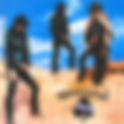
Written By: Moti Kupfer Release date - 8.11.1980 (According to some sources October 1980) In 1979, music writer Geoff Barton coined the term "New Wave of British Heavy Metal" (NWOBHM) to classify a series of new bands such as "Iron Maiden", "Def Leppard" and "Saxon". Bands that combined the heavy sounds of traditional metal with the energy of punk rock. Another band that fell under this definition was "Motörhead", which was among the bands that were difficult to define precisely, and actually played rock and roll influenced by British metal, only they played really fast and wild, when their defining moment came with the title song of their fourth album "Ace of Spades", which was released on November 8, 1980 (and according to some sources in October 1980). The unique playing style that made it difficult to define, together with the growling vocalist, with his hoarse voice, would have a decisive influence on the thrash metal movement that developed two years later, and included bands like "Metallica" and "Megadeth". Power, energy and unrelenting speed. "Motörhead" showed no mercy with their constant, fast, and energetic rhythm. The classic line-up of the band, included Lemmy Kilmister (bass/vocals), "Fast" Eddie Clarke (guitar), and Phil "Philthy Animal" Taylor on drums. The band's undisputed leader, and its raspy-voiced lead singer, was Lemmy Kilmister . Kilmister was greatly influenced by the rock 'n' roll style and the early work of the "Beatles", and joined several rock bands during the 1960s. The most important of which was the "Rockin' Vickers". He later became a member of Jimi Hendrix 's touring crew, and "The Nice", and next joined the space rock band "Hawkwind" in 1971. Four years later, he was fired from the band after being caught with drugs at the Canadian border. Lemmy said that this was just an excuse to fire him, and that the real reason was the jealousy of the band's lead singer, Dave Brock, who was jealous that the song "Silver Machine" on which Lemmy sang was the one that became a hit. Shortly after his dismissal from "Hawkwind", Lemmy formed a band called "Bastard", changing It was later renamed "Motorhead", after the last song he wrote and sang in "Hawkwind". Before "Ace Of Spades", "Motorhead" had already made an impact with albums such as "Overkill" and "Bomber". These albums showcased the band's unique combination of punk energy and powerful heavy metal playing, which laid the foundations for their masterpiece. Recording sessions for "Ace Of Spades" took place at "Jackson Studios" in Rickmansworth, England, during August and September 1980. This studio, known for its intimate setting and quality acoustics, provided the perfect environment for "Motorhead" to unleash their musical abilities. The band's decision to work with Vic Maile, a producer with an impressive reputation, proved to be a key choice in shaping the album's sound. Maile, affectionately known as "Turtle" by the band, brought a wealth of experience to the project, having worked with such legendary artists as Jimi Hendrix and "Led Zeppelin". The album's constant use of harmonies, vocals, and instrumentation made it a hit for its time, making its heavy sound more accessible. An example of this can be found in the song " The Chase Is Better Than The Catch ". It was undoubtedly "Ace Of Spades" that made Lemmy a living legend. Through his lyrics, music, bass and voice, he reflected a "real" lifestyle, a man who literally lived for rock and roll. The song was written by Lemmy Kilmister as a metaphor for gambling, with an emphasis on cards and dice, with the song's progression sounding like the middle of a poker game. The song " Shoot You in the Back " uses the classic Wild West motif. Beyond the title track, the album is packed with gems like " (We Are) the Road Crew ," a tribute to the band's crew, and " The Hammer ," which perfectly illustrates the tireless energy of "Motörhead." Lemmy established his style with raspy vocals, aggressive lyrics, and a bass that not only accompanied but also served as a leading instrument. Direct bass distortion from his Marshall amplifier can be heard throughout his work. The influences that shaped "Ace Of Spades" were diverse, stemming from rock and roll, blues, and punk. Lemmy Kilmister 's admiration for artists like Little Richard and Chuck Berry infused the album with a raw, unfiltered energy that set it apart from its contemporaries. The band's ability to combine these elements with the evolving sounds of heavy metal and speed metal resulted in a unique sonic experience. Released in 1980, "Ace Of Spades" coincided with significant global events, such as the election of Ronald Reagan as President of the United States, the eruption of Mount St. Helens, and the launch of CNN, the first 24-hour news channel. The album's title, "Ace Of Spades", was inspired by Lemmy Kilmister 's love of gambling and the lifestyle that went with it. The concept of living on the edge permeated the album, from its lyrics to its cover art. The artwork, designed by Joe Pettenuo, depicted the band dressed as outlaws in a desert setting, reinforcing "Motörhead's" rebellious image. For Listening: Spotify , Apple Music "Face/Off" - Israel's Rock Blog Follow us on Facebook / Instagram or Subscribe to our website
- Don Henley - Building the Perfect Beast
Written By: Moti Kupfer Release date - 19.11.1984 In Early 80s One of the most beloved bands in the US, "The Eagles" broke up with great noise, as personal differences between the band members became more and more intense due to fame, money, and drugs. This soap opera ended with mutual accusations and threats of violence. This happened at their last concert (until their comeback in 94), when singer Glenn Frey threatened guitarist Dan Felder with "I'm gonna kick your ass when we get off the stage". The band's drummer lead singer, and one of its songwriters Don Henley decided to start a solo career: "I said, 'God, can I do this by myself?' I thought maybe I should put another band together. Then I said, 'Nah, I can do this.' I drank a lot of Scotch making that first album," he told Record. "And then after it was done, I figured, 'Yeah, I can do this,' so this album was much more confident. ... I stretched further and took more chances." Before embarking on his solo career, Henley had come to a different way of thinking about performing as an artist in the new decade. "This is the '80s: you dress up now, you have lights. It's showbiz now. It's not the '70s and the '60s anymore; it's completely different" he claimed. In order to update and adapt his style to the 80s, Henley spent two years watching the performances of "The Eurythmics", Paul Young, and Tina Turner, in order to understand what was required of him. After his debut album "I Can't Stand Still" released in 1982, Henley felt more confident in himself, this happened when work began on his second album "Building the Perfect Beast" released on November 19, 1984. For the album, Henley was awarded many collaborations, starting with guitarist Danny Kortchmar (Carole King, Jackson Browne, James Taylor and others), and members of Tom Petty 's backing band at the time, "The Heartbreakers" who contributed to the songwriting, guitarist Mike Campbell, keyboardist Benmont Tench and drummer Stan Lynch. The album also features guitar playing by Lindsey Buckingham from "Fleetwood Mac", and vocals by Belinda Carlisle, and other musicians such as Randy Newman, Jim Keltner (Dylan), Waddy Wattle, Patty Smyth (singer of "Scandal"), the wonderful bassist Pino Palladino, and "Toto" member Steve Porcaro. This album established Henley as an artist in his own right after many years of success with "the Eagles", as he gave birth to many hits. His writing aimed at deep intellectual themes beneath the synthesizer sounds, and the rich production. The opening song, and the first single from the album " Boys of Summer " was given to Henley quite by chance. As the song was originally written for Tom Petty , by his backing band guitarist Mike Campbell. Campbell played the demo to Petty who politely rejected it. Henley, who knew Campbell through Jimmy Iovine, would occasionally drop by his studio to "fish" for new material. On one of these occasions, Campbell played him the demo in question. Henley wrote the lyrics with a nostalgic inspiration of summer, baseball games on empty roads, streets, and "Deadhead" stickers (the hippie and a die-hard fan of the "Grateful Dead"). Additional credit for Henley's high-pitched singing style on the song is given to Bob Seger, who stopped by the studio just before the song was completed and advised him to sing "Boys of Summer" higher. The song became Don Henley 's biggest hit of his solo career (in terms of sales) and second only to "Dirty Laundry" when it reached number five on the Billboard charts. The black-and-white video was shot by French graphic designer and photographer Jean-Baptiste Mondino. Mondino met Henley in California and said: "When I listened to 'Boys Of Summer,' there was something nostalgic - he was looking back, talking about something that he's leaving behind". When Henley accepted the award for Best Video, he admitted he had no idea what was going on when they shot the clip, but said Mondino and his crew made "Southern California look like the South of France." The clip won four awards, for Best Video of the year, Best Direction, Best Art Direction, and Best Cinematography. Henley has a knack for writing about the heart and soul of America, blending his love of country and small-town life (" Sunset Grill ") with cynicism about government, global instability (" All She Wants to Do Is Dance "), and modernization (" A Month of Sundays "). The album sold 3 million copies in the U.S., spawning another Top 10 hit (" All She Wants to Do Is Dance "). Henley's earnest delivery and universal messages give many of the songs on the album a timeless feel, and that's no small feat. For Listening: Spotify , Apple Music "Face/Off" - Israel's Rock Blog Follow us on Facebook / Instagram or Subscribe to our website
- Phil Collins - ...But Seriously
Written By: Moti Kupfer Release date - 20.11.89 He is one of only three artists in the history of music (the other two are Paul McCartney and Michael Jackson) to have sold more than 100 million albums both in his solo career and as part of the band. Perhaps this is what causes a lot of envy towards him, among others super successful artists like Noel Gallagher from "Oasis" who said: “Just because you sell lots of records it doesn't mean to say you're any good. Look at Phil Collins”. Collins knows the criticisms that accuse him of over-commercialization, but you have to admit that there is a lot of grace in the way in which the drummer of "Genesis" in his early career, made his way up, with the special drum sound, and the brass section that was reflected in his albums. After finishing the tour with "Genesis" in 1987, and riding on the sucsess on the charts of songs from his fourth solo album "No Jacket Required" and from " Invisible Touch " with "Genesis", Collins decided to pause his musical career for a while, and turned to acting in the film "Buster", a romantic comedy film based on the Great Train Robbery. In March 1989, Lily Collins, Phil's first doughter, was born, and the world he saw before his eyes began to change. "I feel I’m treading new ground … writing about things that I’ve felt for a long time but never really written about," he said in an interview. It was Collins, more thoughtful and serious than ever, so it's no wonder he chose to call his fifth album, released on November 20, 1989, "...But Seriously." Collins of 1989 wrote and addressed more serious lyrical themes, socio-economic and political issues. Unlike his joyful previous album, in "...But Seriously" the atmosphere is heavier and much darker. True, here too there is the rhythm section that sometimes lifts morale a little, but still, the happy Collins's perspective was no longer complete, a new child was born, and added a lot of room for worry. The album was produced by Collins and Hugh Padgham who worked on his previous solo albums, and on the last "Genesis" albums throughout the decade. Collins returns to using a live drum kit, in contrast to "No Jacket Required" which featured extensive use of a drum machines. He also made prominent use of keyboards and electric piano, and less use of synthesizers. Collins made a conscious decision not to rely on vocal effects on this album, as his previous recordings, including with "Genesis", featured the use of a harmonizer, while in retrospect Collins saw this as a way to hide the shortcomings of his singing. The album opens, as if it were a continuation of its predecessor, with the rhythmic " Hang in Long Enough ", which alludes to the theme of "holding on", and fills the listener with ambition and optimism. But the optimism is immediately shattered when the anti-war ballad " That's Just the Way It Is " begins, a song Collins wrote about the difficult political situation in Northern Ireland, and features David Crosby on backing vocals. Collins had wanted Crosby to appear on his first solo album, "Face Value" from 1981, but he was unavailable at the time. The two met at a concert celebrating the 40th anniversary of "Atlantic Records" in 1988, and Crosby, eager to be on the album, also sang backing vocals on one of its biggest hits, " Another Day in Paradise ." Ballad follows a ballad, and this time " Do You Remember? " A song written by Collins from the perspective of a man who longs for his last failed relationship because he neglected his partner. Singer Stephen Bishop contributes background vocals here. Getting back to the rhythm with " Something Happened on the Way to Heaven ," a song written by Collins with "Genesis'" touring guitarist Daryl Stuermer, about a man who broke off his relationship with his lover and now hopes and believes he can bring her back to him. It was the last song written for the album and was initially intended for "Four Tops," but Collins ultimately decided to keep it for himself. While the song was being worked on in the studio in England, Stuermer came up with some chords for the chorus, resulting in Nathan East playing bass on the new parts, after bassist Leland Sklar left for the US. In the political " Colours ", Collins condemns apartheid in South Africa, the song was originally titled "Oh Mr. Botha, What Can We Do?", referencing the song "Oh! Mr Porter". On " I Wish It Would Rain Down ," Eric Clapton contributes his wonderful guitar playing to a gospel-influenced song written by Collins about a relationship that may have ended due to infidelity. Collins wrote " Another Day in Paradise " about homeless people and its first title was actualy "Homeless". Collins, who had never experienced hunger and poverty, was walking around the US capital, Washington, one day during a concert tour, where he encountered homeless people on Capitol Hill who were trying to keep warm. While leaving the studio recording the song, Collins encountered a homeless woman with two children who asked him for some money. Collins was disappointed by his own reaction, which included completely ignoring the woman and asking for her help. He realized that his instinctive reaction was what happens to most people, which reinforced in him the realization that one should not stand by and help must be given to her. " Heat on the Street " was written by Collins as a political song about street abuse and violence. " All of My Life" was written by Collins about his relationship with his late father and the regret that he did not have a better relationship with him during his lifetime. Steve Winwood plays the Hammond organ on the song. " Father to Son ", on the other hand, is a ballad about Collins' relationship with his eldest son, Simon. The album yielded six successful singles, sales of approximately 14 million copies worldwide, and won a Grammy Award. For Listening: Spotify , Apple Music "Face/Off" - Israel's Rock Blog Follow us on Facebook / Instagram or Subscribe to our website
- The Beatles - With the Beatles
Written By: Moti Kupfer Release date - 22.11.63 In 1975, director Ken Russell's surreal musical film "Lisztomania" was released. The film was about the dramatic life story of the 19th century classical pop star, composer and pianist Franz Liszt. The term "Lisztomania" was coined by the poet and writer Heinrich Heine in response to the mass fan hysteria that accompanied his performances. About a century later, the cross-border hysteria returned again, called "Beatlemania". "Beatlemania" is a "mass psychosis" that struck Britain, the United States, and the rest of the world towards the mid-sixties in everything related to "The Beatles", especially among young teenage girls. "Beatlemania" was characterized by complete hysteria about everything related to the band, from their hairstyles, clothing, and more. Gatherings of female fans were documented at sites where the band members visited, with an emphasis on airports, and of course deafening screams during performances, how deafening? To the point where the members of the "The Beatles" could not perform properly due to the deafening noise, which damaged the quality of their playing. The phenomenon forced the band members isolation when they went on tour, due to the fear of being harassed, even in their free time. Ultimately, the phenomenon of "Beatlemania" hastened the retirement of "The Beatles" from live shows in 1966, after feeling disgusted by the insane number of performances they had done so far, and the poor quality of the performances due to the the hysteria in the audience. "Those years were a continuous hell for us", said George Harrison in his autobiography "I Me Mine". The term "Beatlemania" was first used at the end of 1963, a year that was exceptional in its chart success for "the Beatles". In March they released their debut album "Please" Please Me " which topped the British album chart for 30 consecutive weeks, while it gave way to their second album "With the Beatles" which was released on 22.11.1963, and created a streak of 21 weeks at the top of the British album chart. In total, "the Beatles" dominated the album chart for 51 consecutive weeks. Eight months after their debut album, "The Beatles" continued with the formula that had worked so well with short classic rock songs. The album featured six covers of Motown R&B songs, and eight original songs, seven by John Lennon and Paul McCartney , and a debut by George Harrison , whose next song would not appear until the album " Help " two years later. Ringo Starr 's contribution to the album (beyond drumming) focused on backing vocals on the song " I Wanna Be Your Man " and his diverse record collection that included blues and country, exposing his bandmates to many songs. The album was released in Britain on Friday, November 22, 1963. To Americans, this date sounds a little less festive. While demand for the newly released album was at record levels in Britain, including pre-orders of half a million copies, an event occurred across the Atlantic that shocked the world. It was early afternoon in the United States when three shots were fired at the motorcade of US President John F. Kennedy, seriously wounding him. Shortly after 1 p.m. US time, news anchor Walter Cronkite announced with a sad face the death of the president and the transition of Vice President Lyndon Johnson into the new president. That tragedy completely shocked the entire American nation, on the day of "With the Beatles" release, and this album would later turn out to be part of the healing process of American society, at least from the perspective of the youth who would focus on admiration for "the Beatles" instead of focusing on grief and mourning for their dead president. The lyrics of the songs dealt mainly with love and its derivatives, but Lennon and McCartney sometimes played with word games, as can be seen in the opening song " It Won't Be Long ", in which the word Yeah is mentioned no less than 56 times. The word games here between "It Won't Belong" and "till I belong" were one of Paul McCartney 's hobbies, who studied literature at school. In " All I've Got to Do " John Lennon admitted that he was inspired by From Smokey Robinson's songs along with the "Miracles". " All My Loving " was written by Paul McCartney while shaving one morning and thinking about his then-girlfriend Jane Asher. It was the first time McCartney wrote the lyrics before composing the melody. The fourth track on the album, " Don't Bother Me ," was Harrison's first lyrical contribution to a "Beatles" album. It was a song he wrote while he was sick with the flu and resting in a hotel between shows. Naturally, the song has a dark and pessimistic mood, telling the story of a guy whose girlfriend has left him and is looking to isolate himself from the world. " Little Child " seems like a simple love song, in which a child who is afraid of the dark asks his responsible adult to stay with him until morning. Who among us as a parent hasn't encountered such a request from their child? In fact, the song has a more complex meaning, especially in light of the period in which it was written. In the early 1960s, rock and roll music was considered to have a negative impact on young people. Many parents forbade their children from listening to it. "The Beatles" changed this by appealing to the general public, both young and old. The song was inspired by Walt Disney's film "Robin Hood." The dark and serious album cover, was a reflection of what was going on in the souls and minds of the fab four, who felt that they are growing up quickly. The photo was taken by the Sunday Times photojournalist Robert Freeman, who had photographed jazz musicians such as John Coltrane and Dizzy Gillespie, among others. "The Beatles", who loved black and white photography, showed Freeman photos from their Hamburg concerts that included plays of light and shadow, and asked him to create a similar image. For Listening: Spotify , Apple Music "Face/Off" - Israel's Rock Blog Follow us on Facebook / Instagram or Subscribe to our website
- The Crickets - The "Chirping" Crickets
Written By: Moti Kupfer Release date - 27.11.57 He is without a doubt one of the first, if not the first, on the list. An album that helped ignite everything in rock ’n’ roll music. In 1941, Les Paul designed the first solid-body electric guitar. A decade later, that guitar began gaining popularity. The seeds of rock ’n’ roll were forming through a fusion of gospel and rhythm & blues. Then it was radio DJ Alan Freed who coined the term “rock and roll” back in 1951. The "Les Paul" guitar helped artists like Chuck Berry, Link Wray, and Scotty Moore develop a more sophisticated style of rock ’n’ roll guitar playing. The earliest rock ’n’ roll songs began taking shape through artists such as Elvis Presley, Chuck Berry, "Bill Haley & His Comets", Little Richard, Jerry Lee Lewis, and others. Five years before the "Les Paul" was born, Charles Hardin Holley was born into a musical family in Lubbock, Texas (1936). He would later form the group "Buddy & Bob", together with Bob Montgomery. That name Buddy stayed with him until the day he died, on what would later be called “the day the music died” (3.2.59). That same Buddy Holly would go on to become one of the most influential musicians in popular music. "The Beatles" chose their name partly in homage to Holly’s band "The Crickets", who released their debut album “The ‘Chirping’ Crickets” on November 27, 1957. Elton John began wearing glasses long before he needed them, simply to resemble his idol Buddy Holly. Bob Dylan , who saw Holly perform as a teenager, said that this show inspired him to pursue music. Even "The Rolling Stones" considered Holly a major influence. At age 11, Holly started piano lessons, but he abandoned them after seeing a classmate playing guitar and singing on the school bus. It was the instrument that immediately captured his imagination. Holly learned guitar through his brother Travis, who had already taught himself to play. As a child, Buddy Holly was influenced by country artists such as Hank Williams, Bob Wills, Jimmie Rodgers, and Hank Snow. He practiced and played with Bob Montgomery, and he also started collaborating with other musicians he met in high school, including Sonny Curtis and Jerry Allison. Holly’s attraction to rock ’n’ roll began in 1953, when he and Sonny Curtis would sit in his car late at night tuning the radio to distant stations that played rhythm & blues, signals that could only be received after dark. This was the moment where Holly began merging his country background with R&B influences. From 1954 onward, Holly recorded demo tapes with local musicians such as Sonny Curtis, Jerry Allison, and Larry Welborn. Two years later, Holly’s band - then called "Buddy and the Two Tones" (with Curtis and Don Guess) - recorded a rockabilly album that ultimately failed. After Holly and his band opened shows for acts like Elvis Presley and "Bill Haley & His Comets", talent scout Eddie Crandall helped him secure a contract with "Decca Records". The deal turned out to be problematic. Holly soon found himself working with producer Owen Bradley, who controlled the arrangements and chose all the session musicians - leaving Holly frustrated by the lack of creative freedom. Following an unsuccessful tour, in January 1957, "Decca" informed Holly that they would not renew his contract, but yet insisted that he was forbidden from re-recording the same songs for anyone else for five years. In desperation, Holly began playing with Jerry Allison, bassist Joe Mauldin, and rhythm guitarist Niki Sullivan. Together they recorded a demo of “That’ll Be the Day” at Norman Petty’s studio - a song Holly had already recorded in Nashville. This time, Holly played lead guitar himself, he showcased a fast, groundbreaking picking style that finally gave him the sound he had been searching for. But there was a catch. Holly could not release the song under his own name because of the restrictions imposed by "Decca". His bandmates stepped in to help, and the song was released under the band’s new name. It was Allison who suggested “The Crickets”, inspired by the band’s fondness for groups named after birds. Although "The Crickets" were widely viewed as Holly’s band, the album showcases the strengths of all its members. Everyone contributes equally, and the band wrote a substantial portion of the material, something highly unusual for groups of their type in those days. Norman Petty became Holly’s manager, and he was the one who sent the demo to "Brunswick Records" in New York. Neither he nor Holly realized that "Brunswick" was actually a subsidiary of "Decca". By late September, “That’ll Be the Day” - the debut single by "The Crickets" - reached number one on both the American and British charts, staying there for three weeks. The follow-up single “Oh Boy!” also reached the Top 10 in both countries, just a month before the album’s release. The rest is history… For Listening: Spotify , Apple Music "Face/Off" - Israel's Rock Blog Follow us on Facebook / Instagram or Subscribe to our website