


Fleetwood Mac - Tusk

Written by: Moti Kupfer
Release date - 12.10.1979
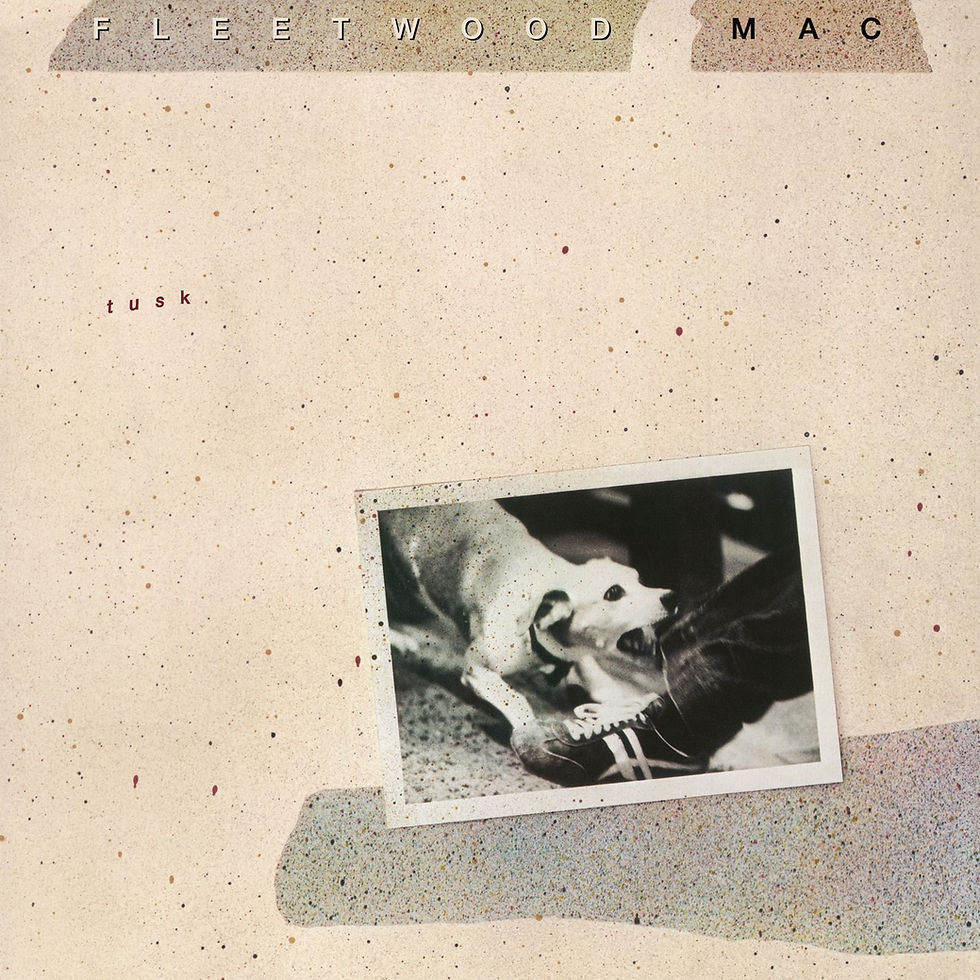
Lindsey Buckingham said he would have loved to be a fly on the wall when the people at Warner Bros. first played the album in their boardroom. He was talking, of course, about "Tusk", the twelfth studio album by "Fleetwood Mac", a wildly eccentric double album conceived as a response to their magnum opus, "Rumours", and released on October 12, 1979.
Some albums are so good, and so enormous, that whatever follows risks being dismissed as a disappointment. That was the starting point for "Tusk". Even its title, a slang term for the male anatomy used within the band, offers a clue to just how far Buckingham was prepared to stray from the success of "Rumours".
Ask Stevie Nicks, and she would hardly have approved that title for a "Fleetwood Mac" album. By this point, though, Buckingham was not giving her opinion much weight. Considering the emotional upheaval surrounding the band, "Tusk" feels like something of a miracle. Nicks and Buckingham had split, as had Christine and John McVie. There was Nicks' affair with Mick Fleetwood, his wife's earlier affair with former band member Bob Weston, Christine's relationship with lighting director Curry Grant, and Fleetwood's relationship with Nicks' friend Sara Recor. Add staggering quantities of cocaine to that tangled web, and it is remarkable that an album emerged at all.
Buckingham went far, almost too far. He deliberately set out to take the band as far from "Rumours" as possible. Perhaps that record reminded him too much of his crumbling relationship with Nicks. Perhaps he saw an opportunity to change the band's musical direction for a third time.
Whatever the reason, Buckingham, who wrote almost half of the double album's songs, nine out of twenty, ensured that a special studio was built to meet the band's needs. Known as "Studio D", it was constructed at "The Village Recorder". The cost of producing the entire album was estimated at the time at around one million dollars.
Once the studio had been built, Buckingham asked Fleetwood about recording some songs at home. Fleetwood agreed, but insisted that the other band members become involved in the recordings at some stage.
For certain tracks, Buckingham used a Kleenex box as a snare drum and asked Fleetwood to overdub his own drums onto the demos. Several songs were recorded with Buckingham playing every instrument, including "The Ledge", "Save Me a Place", and "That's Enough for Me". Producer Ken Caillat recalled Buckingham's obsessive approach in the studio.
"He was a maniac," Caillat recalled. On the first day, after Caillat had set up the studio as usual, Buckingham asked him to turn every knob 180 degrees and see what happened. He would tape microphones to the studio floor and sing in a push-up position. Caillat also remembered him arriving after an episode in the shower during which he had cut off his hair with scissors.
Buckingham expressed an interest in launching a solo career during the making of "Tusk". In an effort to keep him on board, the other members accepted his wish to make a more experimental album, one that reflected their intensely claustrophobic personal turmoil.
An admirer of "Talking Heads" who was looking toward post-punk, Buckingham also drew inspiration from "Smiley Smile" by "The Beach Boys". He allows the songs by Christine, who contributed six, and Nicks, who wrote five, to unfold in long stretches of mellow warmth, then tears them open with manic, restless bursts, like the mounting tension in "The Ledge".
While Christine and Nicks contribute some excellent songs, Buckingham owns this album through his restless energy and obsessive production. This is mainstream madness, pushed even further than his hero Brian Wilson's experiments, but with a leaner sound.
If "Rumours" captured the collapse of the band's relationships, "Tusk" confronts an even more complicated situation. How do you turn a romantic relationship into a purely creative partnership while navigating all the dangerous ways in which love feeds art, and art feeds love?
Many of the album's songs grew out of relationships within the band. The emotional baggage between Buckingham and Nicks can be heard in "Save Me a Place", "What Makes You Think You're the One", and "That's Enough for Me". "Storms" has been linked to Nicks' affair with Fleetwood, which damaged his marriage to Jenny. In it, Nicks reckons with what she has done.
One of the album's two biggest hits was "Sara", which Nicks wrote alone at the piano. According to her, the original version lasted sixteen minutes and was repeatedly trimmed, to around six and a half minutes for the album and roughly four minutes and forty seconds for the single.
There are several interpretations of the song. One connects it to Fleetwood's romance with Sara, which brought his relationship with Nicks to an end. Nicks herself explained that the song contains pieces of her, Sara, Fleetwood, and the relationships surrounding them.
Nicks wrote "Sisters of the Moon" before "Tusk" was released, and the band was already performing it live in 1978. She explained that it grew out of her deteriorating health while touring with "Fleetwood Mac". After months of exhausting shows, she caught sight of herself in a mirror, pale and fragile, and was frightened by the figure looking back at her.
Christine wrote six songs for the album, including "Brown Eyes". She initially claimed it was about her dog, but later told Caillat that it concerned her then-boyfriend Dennis Wilson of "The Beach Boys", whose eyes were actually green.
The band eventually completed thirty-seven takes before settling on the master recording. During the sessions, Dennis sat in the control room and offered suggestions about how to approach the song, although several people, including Fleetwood and John, rejected those ideas.
Peter Green, one of the band's founders, also took part in the sessions for "Brown Eyes". His guitar playing is uncredited on the original album, but can be heard during the fade-out. An extended version featuring more of his performance appeared on the 2015 reissue.
Nicks described "Beautiful Child" as a lullaby and one of her most special songs. She said it was written about her affair with Derek Taylor, who had served as a road manager and publicist for "The Beatles" and was around sixteen years her senior.
Although it sold fewer copies than the band's two previous albums, "Tusk" still sold around four million and spent thirty-seven weeks on the American album chart. It reached number one in Britain and number four in the United States, and produced two Top 10 hits, "Tusk" and "Sara".
Fleetwood described "Tusk" as his favorite album and praised Buckingham for ensuring that the band did not simply make a copy of "Rumours". Fleetwood blamed the RKO radio network for the album's relative commercial disappointment, arguing that broadcasting it in full before its release had allowed listeners to make home recordings on a massive scale.
For Listening: Spotify, Apple Music
"Face/Off" - Israel’s Rock Blog


Comments