


Aerosmith - Toys in the Attic

Written By: Moti Kupfer
Release date - 08.04.1975
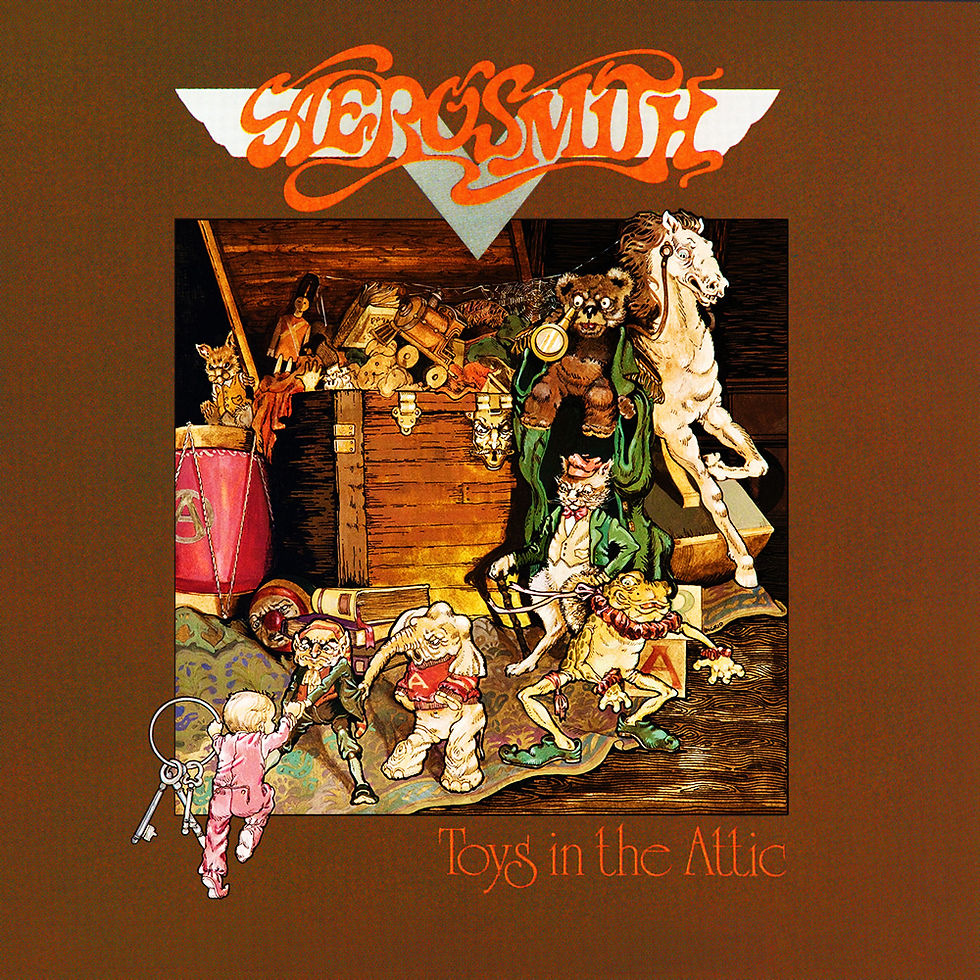
When “Aerosmith” began working on “Toys in the Attic”, their growing confidence was fueled by the momentum of their previous tour. While their first two albums were largely built on songs they had been performing live in clubs for years, this time the band approached the process differently and started almost entirely from scratch. Guitarist Joe Perry later described it as a turning point where the band truly began to develop its identity in the studio.
During the making of the album, the band learned how to function as recording artists, adapting to deadlines and a more structured creative process. The sessions evolved into a collaborative environment, with all members contributing ideas and shaping both the songwriting and arrangements together.
Released on April 8, 1975, “Toys in the Attic” became the breakthrough album of “Aerosmith”. A major part of that success is credited to producer Jack Douglas, who guided the band closely throughout the sessions and effectively acted as a sixth member.
Douglas, who had previously worked as a recording engineer with artists such as John Lennon, "The Who", Miles Davis and "Cheap Trick", described how the band entered the studio with only a handful of songs. For the first time, most of the material was written during the recording process itself.
Prior to the sessions, they spent time in the studio rehearsing, developing ideas, and shaping the songs before committing them to tape.
A significant amount of time was dedicated to pre-production, allowing the band to focus creatively without the pressure of touring. This period helped Douglas understand the strengths of each band member and how to bring them together into a cohesive sound.
According to Douglas, Steven Tyler stood out as a particularly gifted lyricist. His approach was to write lyrics after the music had already taken shape. While he possessed a sharp sense of humor and creativity, he was also deeply self-critical and increasingly struggled with the pressure he placed on himself, making the writing process more difficult over time.
Joe Perry later reflected on Tyler’s process, describing how challenging it is to craft lyrics that both tell a story and fit rhythmically. He noted that Tyler would often immerse himself in the recordings, listening repeatedly while moving around until he was able to find the right words.
Tensions within the band also influenced the material. Steven Tyler reportedly had a difficult relationship with Joe Perry’s then-wife Alicia Jarrett, comparing her presence to that of Yoko Ono, and this dynamic became associated with the inspiration behind the song “Sweet Emotion”.
“Adam’s Apple” was written by Steven Tyler as a modern interpretation of the biblical story of Adam and Eve. At the same time, Tyler subtly weaves in references to his own struggles with substance use, particularly in the title track, which reflects a state of mental disorientation and loss of control.
With “No More No More”, Tyler shifts perspective and writes from the point of view of a touring musician, capturing the realities of life on the road, from hotels and groupies to the underlying sense of monotony. The song functions almost like a personal journal, documenting the experience behind the scenes.
As the album neared completion, “Aerosmith” realized they were still missing one more track. They turned to a piece Joe Perry had originally composed in Hawaii, though it still lacked both lyrics and a title.
Producer Jack Douglas pushed the band to develop it into a high-energy track. The music was recorded, but the band struggled to come up with lyrics or even a clear direction, and at one point considered leaving it as an instrumental.
Despite that, the groove of the track was too strong to ignore. The band decided to step away from the studio to clear their heads, heading with Douglas to Times Square to watch “Young Frankenstein” by Mel Brooks.
That break would prove pivotal. Inspired by a scene in the film where Marty Feldman, playing Igor, walks awkwardly down a platform and delivers the line “Walk this way” to Gene Wilder, Douglas immediately recognized the phrase as the perfect title for the song.
Back in the studio, the band now had a concept, but still needed lyrics. That same night, Tyler wrote them in his hotel room, only to accidentally leave them behind in a taxi on the way back to the studio the next morning. At first, no one believed him, and it seemed as if the lyrics had never existed at all.
Shaken by the situation, Steven Tyler took a cassette of the instrumental track along with a portable tape player and headphones, disappearing into a stairwell to reconstruct what he had lost. He ended up rewriting the lyrics on a wall in the upper floor of a record store called Planet. After roughly two hours, he managed to fully recreate “Walk This Way”, shaping lyrics that tell the story of a teenage boy losing his virginity.
Joe Perry saw the result as something exceptional. Coming from a background as a drummer, Tyler approached lyrics not only as storytelling, but as a rhythmic element. For him, words had to carry meaning, but also function like percussion, bouncing within the groove of the track.
Tyler was constantly drawn to double entendres rooted in the blues tradition, pushing lyrical boundaries while maintaining enough subtlety to avoid censorship. Perry later recalled the reaction of David Johansen of “New York Dolls”, who responded strongly to “Walk This Way”, recognizing just how far the band had pushed that edge between suggestiveness and mainstream exposure.
The song went on to become the second major hit for “Aerosmith” in the United States, following the success of “Dream On”. More than a decade later, at a time when the band’s career was in decline, it was a hip hop reinterpretation by "Run-DMC" that brought “Aerosmith” back into the spotlight and reintroduced them to a new generation.
As for the album’s title, Steven Tyler later explained that it was chosen for its layered meaning. Beyond the immediate imagery, he viewed the record as something that listeners would return to years later with a sense of nostalgia, much like rediscovering old toys stored away in an attic.
For Listening: Spotify, Apple Music


Comments