


U2 - Boy

On October 20, 1980, "Boy", the debut album by "U2", was released.

Four Dublin boys, vocalist Bono, guitarist The Edge, bassist Adam Clayton and drummer Larry Mullen Jr., entered the studio in July 1980, the oldest of them just 20 years old, and emerged with one of the most honest and moving debut albums of the post-punk era. "Boy" doesn't sound like an album by a band that already knows where it's going. It sounds like a band discovering its voice while recording, with all the energy, confusion and fear that accompany the transition from childhood to adulthood.
Martin Hannett was originally supposed to produce the album. He was the man who shaped the sound of "Joy Division" and produced the first "U2" single for Island Records, "11 O'Clock Tick Tock". But the band had not enjoyed working with him, and the label abandoned the idea in the face of their objections. Hannett himself was also deeply affected by the suicide of "Joy Division" singer Ian Curtis in May 1980. To find a replacement, Island sent "Three", the EP "U2" had released the previous year, to Steve Lillywhite. He liked what he heard, but thought the recording sounded poor. He travelled to Ireland to see them perform in a small school hall and was impressed enough to agree to produce one single, "A Day Without Me". The chemistry worked, and Lillywhite ended up producing the band's first three albums.
The album was recorded between July and September 1980 at Windmill Lane Studios in Dublin, which would become a recording home for "U2" throughout the 1980s. Lillywhite was unimpressed by the place. He found the wooden room acoustically dead and better suited to quiet folk recordings than to the energy of rock. Frustrated with the drum sound on the previous single, he found a creative solution. He recorded Larry Mullen Jr. in the studio stairwell, with microphones suspended overhead to capture its lively reverberation. Other textures came from breaking bottles and running cutlery along the spokes of a spinning bicycle wheel. The drums could only be recorded in the evening, after the receptionist had gone home, because the telephone rang throughout the day and sometimes even interrupted takes after hours.
The musicians faced challenges of their own. The band struggled to maintain a steady tempo, so Lillywhite and assistant engineer Kevin Moloney spent nights cutting tape to create precise drum loops. Adam Clayton recorded bass parts repeatedly until they met the producer's standards. Bono, who had yet to finish some of the lyrics, filled in missing lines while his bandmates recorded guitars and percussion. Unhappy with the results he got using headphones, he switched to singing with a handheld microphone in the control room, listening to the music at high volume. Little wonder that Lillywhite would later describe his influence on the sound of "Boy" as greater than that of any other producer on a "U2" album.
The guitar sound was, of course, The Edge's domain. He played a Gibson Explorer through Vox amplification and Memory Man delay effects, building his parts around ringing chords and sustained harmonies. His musical reference points included "Television" and "Marquee Moon", the early work of "Siouxsie and the Banshees", and German bands such as "Neu!" and "Kraftwerk". The atmospheric guitar textures also invite comparisons with "Echo & the Bunnymen" and their later albums "Porcupine" and "Ocean Rain", although those records followed "Boy". The energy, meanwhile, remained close to punk.
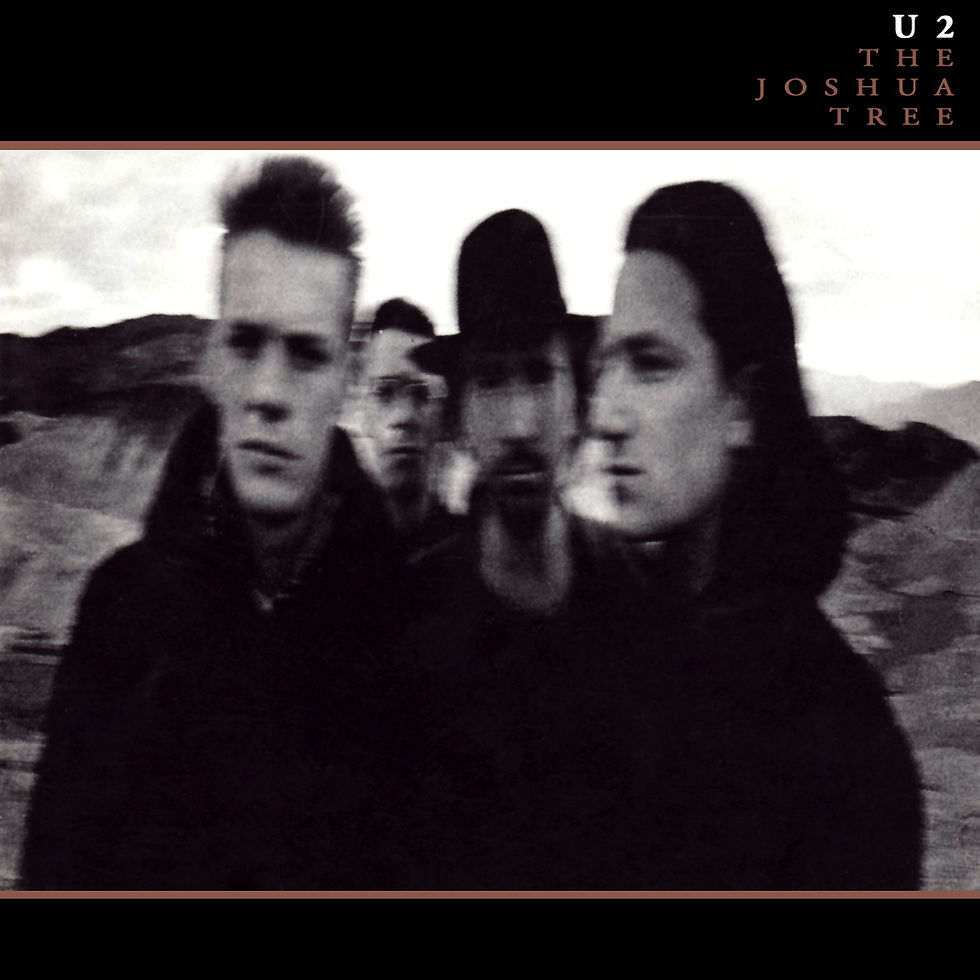
"Boy" is not a concept album, but adolescence is its central theme. Innocence, sexual awakening, the fear of death and the exile from the past that time imposes on us all run through it. That idea is there on the cover, in the face of six-year-old Peter Rowen, the younger brother of Bono's friend Guggi, a member of "Virgin Prunes". Peter had already appeared on the sleeve of the EP "Three" and would later return on "War". Bono imagined a child's face emerging from whiteness, like a photograph still developing, an apt metaphor for a band still taking shape. In North America, however, the label feared the image might be misinterpreted. The album appeared there with an alternative sleeve featuring stretched, distorted photographs of the band. Remarkably, that design remained in use until the 2008 reissue.
The album opens with "I Will Follow", the single that became an emblem of this early period. The Edge's ringing guitar riff and the headlong drums gave "U2" one of their first American radio favourites, reaching No. 20 on Billboard's rock chart. Behind that energy lies a deeply personal story. Bono wrote the lyrics in memory of his mother, Iris, who died when he was 14, and later described the song in terms of the unconditional love between mother and child. It is also the only song "U2" have played on every tour since their debut album, and its video was the band's first. The bottle and bicycle-spoke effects add another distinctive texture to the recording.
"Twilight" leads us deeper into adolescence, followed by "An Cat Dubh" (Irish for "The Black Cat"), written and recorded in the studio and concerned with sexual awakening. From there, "Into the Heart" explores the separation from the past imposed by the passage of time. On "Out of Control", we hear a young band erupting with apparently unrestrained energy, but beneath the surface the song confronts mortality. It is one of two tracks re-recorded from the EP "Three", the other being "Stories for Boys".
At barely a minute and a half, "The Ocean" emerged in the studio and reflects youthful ambition, briefly easing the momentum before the album moves on. "A Day Without Me" is where the partnership with Lillywhite began. Released as a single about two months before the album, it failed to chart, yet played an important role in the band's history. Carter Alan of Boston's WBCN heard it in a record shop, fell in love with it and added it to his playlist, helping introduce "U2" to American listeners. The lyrics suggest psychological distress, although Bono explained in 1982 that some listeners heard it as a song of escape.
The second half continues with "Another Time, Another Place", followed by "The Electric Co.", one of the album's most propulsive and vividly alive performances. Its subject is mental illness, inspired by a friend of Bono who had been hospitalised. "Shadows and Tall Trees" closes the album, taking its title from a chapter of William Golding's "Lord of the Flies". Early vinyl pressings end with a brief instrumental passage drawn from an early version of "Fire", which would appear on the next album, "October". The passage returned as a hidden track on the 2008 reissue.
"Boy" was released in Britain on October 20, 1980, and in the United States on March 3, 1981. It reached No. 52 in the UK and No. 63 on the Billboard 200, but its commercial life extended well beyond that first release. As the band's popularity grew, it returned to the American charts and eventually earned platinum certification there for one million copies, as well as gold certification in Britain.
After its release, "U2" took the Boy Tour through continental Europe and the United States. In March 1981, during a show at a club in Portland, Oregon, Bono's briefcase disappeared from backstage. Inside were lyrics and ideas for the next album, "October".
"Boy" is one of the few "U2" albums whose songs have all been performed live at least once. Like the idea behind its sleeve, it captures a band before the picture has finished developing, and that is precisely what makes it feel so alive. Everything "U2" would later become is already resonating here, in a guitar riff, a stairwell, a snare drum, or one boy looking straight into the camera.
For Listening: Spotify, Apple Music
"Face/Off" - Israel's Rock Blog


Comments