


The Zombies - Odessey and Oracle

Written By: Moti Kupfer
Release date - 19.04.1968
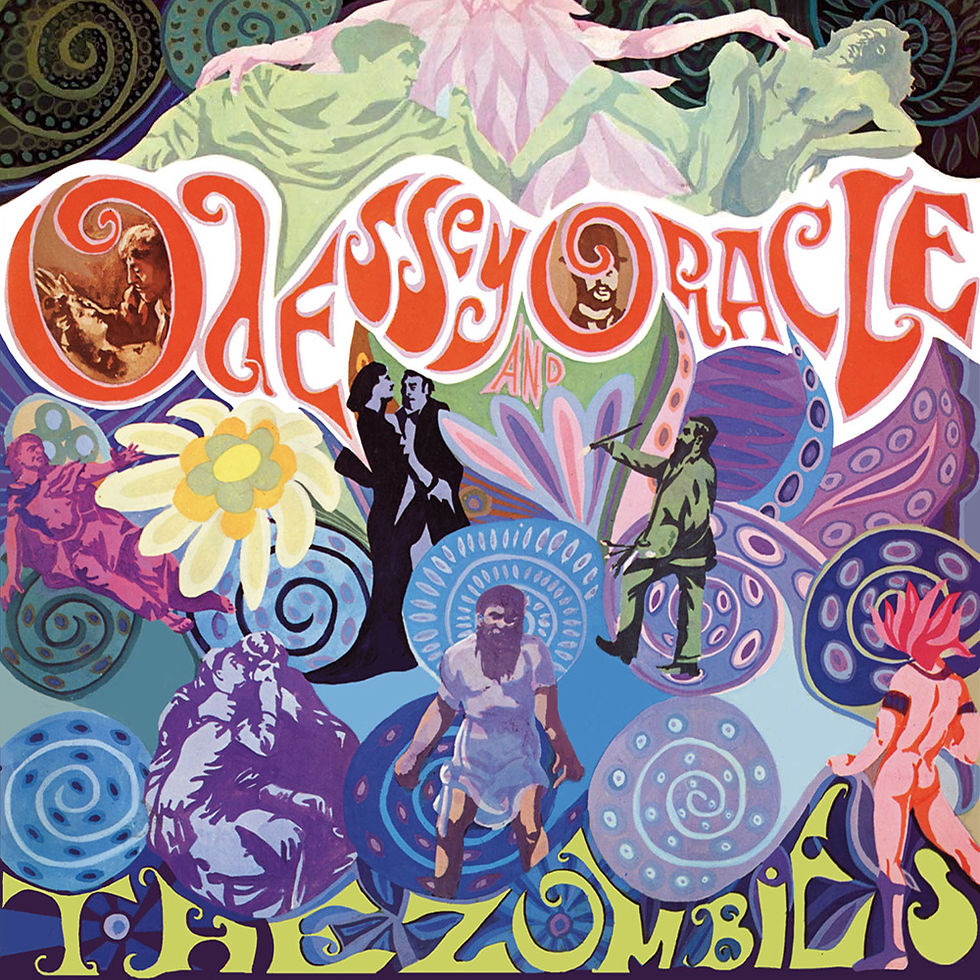
While “The Beatles” were recording “Sgt. Pepper's Lonely Hearts Club Band” in Studio 2 at Abbey Road, no one knew that right next door in Studio 3, five young 22-year-olds had begun recording their own masterpiece, “Odessey and Oracle”, under the name “The Zombies”.
“The Zombies” consisted of Colin Blunstone (vocals, percussion), Rod Argent (keyboards, backing vocals), Paul Atkinson (guitar, backing vocals), Chris White (bass guitar, backing vocals), and Hugh Grundy (drums, backing vocals).
The band began working on the album shortly after “The Beatles” had finished their sessions. According to Colin Blunstone, John Lennon had left behind a Mellotron, along with various percussion instruments scattered around the studio floor. The band also worked with engineers Geoff Emerick and Peter Vince, along with their assistant Alan Parsons, who was just at the beginning of his career.
This collaboration marked the beginning of a long musical connection between Parsons and Blunstone, which would later resurface in “The Alan Parsons Project”, where Blunstone’s soft voice would become forever associated with the melancholic hit "Old and Wise".
It is fair to say that without the instruments left behind by John Lennon and his bandmates, the sound of “Odessey and Oracle”, released on April 19, 1968, might have been completely different. The members of “The Zombies” arrived at these sessions with very limited financial resources, and without a budget for session musicians, they relied on what was available. Lennon’s Mellotron became a crucial tool that helped shape the album’s distinctive sonic identity.
Colin Blunstone was born in June 1945 in Hatfield, Hertfordshire, England, to an aeronautical engineer father and a homemaker mother who had previously been a dancer. He attended St Albans County Grammar School, where he first saw Rod Argent, Paul Atkinson, and Hugh Grundy playing together during an Easter jam session.
Rod Argent, the driving force behind the band’s formation, was also born in June 1945 in St Albans to a working-class family. His father, like Blunstone’s, was an aeronautical engineer. Although his father never formally studied music, he played piano at home, and young Rod listened closely. By the age of nine, he had already decided to become a musician. He joined the choir at St Albans Cathedral and later met Atkinson and Grundy at school, forming early musical collaborations. Following that Easter performance, Colin Blunstone joined the group, along with Paul Arnold, who was soon replaced by Chris White, all while the members were still in high school.
After winning a local music competition, they recorded a demo as a prize. That demo included their first hit, "She's Not There", which secured them a recording contract with “Decca Records”.
From their early days in 1961, “The Zombies” carved out a unique musical identity, blending rich keyboard textures and vocal harmonies reminiscent of “The Beach Boys”, at a time when most bands relied heavily on guitar-driven arrangements with minimal harmonies.
Their debut album “Begin Here”, released in 1965, combined original material with rhythm and blues covers. However, aside from "She's Not There", it failed to generate significant recognition, leading to their departure from “Decca Records”.
Their image as clean-cut, well-mannered young men fresh out of school worked against them. Without a recording contract, the members of “The Zombies” decided to give themselves one final opportunity before disbanding. They managed to convince “CBS Records” to sign them without imposing a strict deadline for the album, which significantly reduced the pressure.
“Odessey and Oracle” was recorded between June and November 1967 and captures “The Zombies” at their artistic peak. The album is filled with melancholic baroque pop compositions, driven by Blunstone’s gentle and delicate voice, the band’s intricate vocal harmonies, and Rod Argent’s jazz and blues-influenced organ and piano work, creating a rich blend of psychedelic melodies.
Most of the album’s songs explore romantic themes, though often from unconventional perspectives. The second single, "Care of Cell 44", tells the story of a man waiting for his imprisoned girlfriend to be released so he can meet her again as a changed person after her experience.
"A Rose for Emily" draws inspiration from a short story by William Faulkner, portraying a woman from a respectable family who falls in love with a man deemed socially unsuitable. Their relationship defies expectations, but when he disappears, she withdraws from the world and remains isolated until her death.
"Butcher's Tale (Western Front 1914)", written by Chris White, stands out as the album’s most unusual track. Inspired by World War I, the lyrics are told from the perspective of a soldier, capturing the horrors and psychological toll of war.
Even after releasing two singles, sales failed to take off, possibly due to the album’s complexity. By the time the third single, "Time of the Season", was released, the band had already disbanded, only for events to take an unexpected turn.
American musician Al Kooper heard the album and convinced “CBS” to release it in the United States. Gradually, it gained momentum, and "Time of the Season" became a hit in early 1969. In the years that followed, many artists, including Tom Petty and Paul Weller, cited “Odessey and Oracle” as a major influence.
For Listening: Spotify, Apple Music


Comments