


Peter Gabriel - Peter Gabriel III (Melt)

Written By: Moti Kupfer
Release date - 30.05.1980
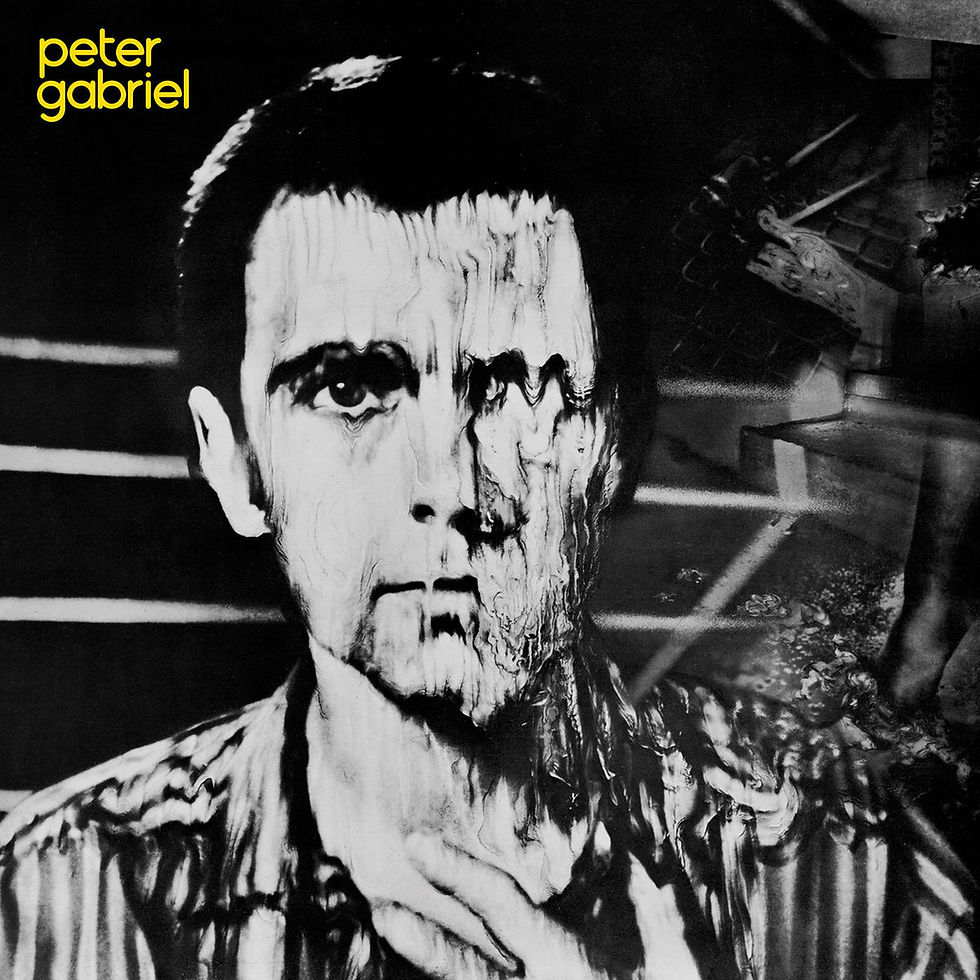
In May 1975, Peter Gabriel shocked the music world during a tour announcement when he declared: I’m leaving “Genesis”. For fans who viewed the band as untouchable, it felt like the beginning of the end for one of progressive rock’s greatest groups.
But like many great rock stories, Phil Collins stepped away from the drum kit and reluctantly found himself becoming the band’s new frontman. It would take Collins another five years before he could thank Gabriel twice.
First, for leaving “Genesis” and giving him the opportunity to take over the band. And second, for inviting him to perform on Peter Gabriel’s third solo album, released on May 30, 1980, the record fans later nicknamed “Melt.”
Collins handled the drums throughout the album and performed on the opening track "Intruder" without using cymbals. Recording engineer Hugh Padgham was working with an SSL console that featured built-in gates and compressors on every channel. During the session, he accidentally opened the talkback microphone in reverse mode, creating an unusually heavy compressed sound while Collins played drums and spoke simultaneously. Padgham immediately realized they had discovered something entirely new.
The “gated reverb” drum effect was born, a production technique that would completely reshape the sound of drums throughout the 1980s.
Collins became obsessed with the sound and only months later brought it into "In the Air Tonight", the song that opened his debut solo album “Face Value”.
While Gabriel’s first two solo albums largely placed the sonic direction in the hands of Robert Fripp from “King Crimson”, the third album marked a major transformation. Gabriel had developed a deep fascination with African music and drum machines, creating a sound that felt dark and mysterious on one side, yet tribal and rhythmic on the other. He achieved this with help from musicians such as Paul Weller, Kate Bush, and of course Phil Collins.
Beyond Collins’ unmistakable touch, the production was placed in the hands of two rising young talents: producer Steve Lillywhite, already known for his work with “Ultravox”, “XTC”, Johnny Thunders, and “Siouxsie and the Banshees”, alongside recording engineer Hugh Padgham.
Peter Gabriel himself remains something of a puzzle wrapped inside another puzzle. A musical genius, but also intensely eccentric. Sometimes that leads to strange decisions, and sometimes to pure magic.
From a songwriting perspective, Gabriel developed a rhythm-first approach while writing and demoing material for the album on an 8-track recording system.
Synthesizer player Larry Fast introduced Gabriel to the programmable drum system made by pAiA, which allowed complete rhythm programming during the writing process. Gabriel began constructing songs around programmed percussion patterns before melodies or lyrics even existed.
Later, he also purchased a Roland CR-78 drum machine for the sessions. Gabriel felt the CR-78 sounded better overall, although it offered less flexibility than the pAiA system.
Gabriel recruited his former “Genesis” bandmate Phil Collins alongside drummer Jerry Marotta for the recording sessions.
He gave them one specific instruction: no cymbals.
Peter Gabriel later explained to journalist Mark Blake that restricting musicians creatively often forced them to become more inventive, which was the reason he banned cymbals during the recording sessions. Collins reportedly adapted quickly to the idea, while Marotta initially struggled with the limitation before eventually understanding Gabriel’s vision.
Throughout the album, Gabriel explores the darker sides of human behavior and the forces that drive people toward extreme actions. The record deals with themes such as an assassin stalking his victim in "Family Snapshot", conformity in "Lead a Normal Life", and xenophobia.
According to reports from the period, executives at Atlantic Records reacted negatively after hearing the material and believed the album would struggle commercially in the United States. The label ultimately refused to distribute it there.
Despite its highly experimental and revolutionary sound, the album became Gabriel’s first major commercial success. "Games Without Frontiers" turned into his first major chart hit, reaching the UK Top 10. The song examines the childish behavior of adults, particularly the kind of nationalism and competitive mentality displayed when countries compete against one another on the Olympic stage.
Gabriel wrote the song before the United States officially boycotted the 1980 Moscow Olympics, an event that only reinforced the song’s central theme of adults behaving like children through meaningless competition and political games.
Kate Bush performs the backing vocals on "Games Without Frontiers", including the repeated French phrase “Jeux sans frontières.” Bush was reportedly added to the track late in the recording process. Gabriel drew inspiration for the song from the 1970s European television game show of the same name, where contestants dressed in bizarre costumes and competed in absurd challenges for prizes. A British adaptation of the show later aired under the title “It’s a Knockout.”
On "I Don't Remember", featuring guest guitar work from Robert Fripp, Gabriel writes about a man suffering from amnesia who finds himself constantly questioned. Gabriel had developed a growing interest in psychiatry during this period and explored many psychological themes throughout the album.
In interviews from the period, Gabriel spoke openly about his fascination with psychology and the way personal experiences influenced his songwriting. He often compared his own emotional experiences with psychological theories while developing lyrical ideas for the album.
On "Through the Wire", Peter Gabriel almost feels like a prophet examining themes of isolation, self-reflection, and the struggle to maintain genuine human connection in a technological world.
The lyrics paint the image of a man trapped behind a screen, desperately reaching out for authentic interaction. As the song progresses, Gabriel explores the difficulty of building real emotional connections in an increasingly artificial environment. He longs for intimacy beyond the limitations of technology, touching on the paradox of modern existence: despite being constantly connected, people can still feel emotionally distant and isolated from one another. The song’s themes feel remarkably ahead of their time, resonating even more strongly in the digital age. Paul Weller provides guitar work on the track.
The album closes with "Biko", Gabriel’s powerful tribute to Steve Biko, the South African anti-apartheid activist who died in police custody in 1977 after being arrested for political reasons.
When Gabriel sings “Yihla Moja,” he performs the phrase in Xhosa, one of the major languages spoken in South Africa, including by anti-apartheid leader Nelson Mandela.
Recording "Biko" had a profound effect on Gabriel personally and became one of the defining moments that pushed him toward deeper involvement in world music and political activism. In later interviews, Gabriel described the song as a declaration that he was willing to become politically involved rather than remain a distant observer.
"Biko" also left a major impact on other musicians. Steven Van Zandt later recalled hearing the song in a Los Angeles cinema around 1980, which inspired him to think more seriously about how musicians could contribute to the anti-apartheid movement. That inspiration would eventually lead to the creation of the “Sun City” project.
Bono from “U2” later invited Peter Gabriel to participate in the 1986 “Amnesty International Conspiracy of Hope” tour, a series of six concerts that raised approximately $2.6 million for human rights causes.
The introduction and ending of "Biko" were heavily influenced by traditional South African funeral music. The song marked Gabriel’s first major step into world music, a direction that would become central to much of his later career. In 1982, he launched the "WOMAD (World of Music and Dance)" festival in order to introduce global musical traditions and non-Western artists to wider audiences.
Following the album’s success, "Atlantic Records" reportedly reconsidered their earlier position regarding Gabriel’s music. Gabriel ultimately chose not to continue working with the label and instead allowed "Mercury Records" to distribute the album in the United States.
For Listening: Spotify, Apple Music



Comments