


Halestorm - Everest

On August 8, 2025, "Halestorm" released their sixth studio album "Everest".
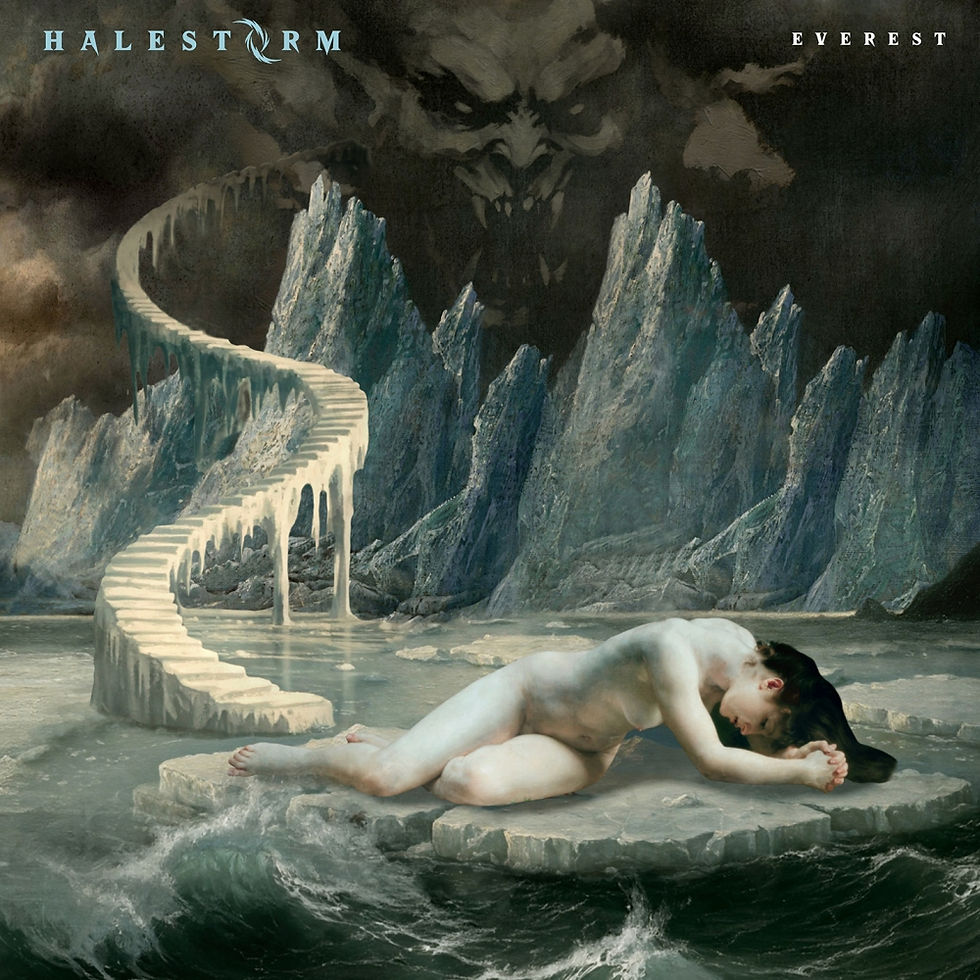
After the defiant comeback of "Back from the Dead", "Halestorm" faced an obvious challenge. They could have doubled down on the arena-ready hard rock formula that had carried them for over a decade, or they could dismantle it and search for something less predictable.
"Everest" chooses the latter.
It is a heavier emotional record than a heavier musical one, trading immediate hooks for atmosphere, vulnerability, and a broader dynamic range.
Working with Dave Cobb proved to be the defining creative decision. Known primarily for his work outside the hard rock world, Cobb strips away much of the band's polished sheen in favor of organic performances that breathe. The guitars remain powerful, but they are no longer expected to dominate every moment. Instead, space becomes another instrument, allowing tension to build before the inevitable explosion. The production never sounds restrained, only more confident in knowing when not to be loud.
At the center of everything is Lzzy Hale, whose vocal performance ranks among the strongest of her career. Rather than relying solely on the commanding screams that made her one of modern rock's defining voices, she spends much of the album exploring restraint. When the power finally arrives, it carries considerably more weight because it has been earned.
Before a single note of Everest was committed to tape, "Halestorm" deliberately abandoned the creative habits that had defined much of their previous catalog. Rather than arriving with polished demos and fully arranged songs, the band embraced Cobb's insistence on beginning with a blank slate. Recording took place in Savannah, Georgia, where the four members lived together in a house converted into a working studio, isolated from the distractions of touring and everyday life. Cobb encouraged ideas to be captured the moment inspiration struck, often writing and recording simultaneously instead of refining songs through endless revisions.
The process was designed to preserve spontaneity rather than perfection.
That philosophy is audible throughout the album. Many of the performances came from the earliest takes, with Cobb favoring instinct over technical precision and encouraging the band to play together as naturally as possible. Instead of polishing away every rough edge, the sessions preserved the chemistry that has always made "Halestorm" such a formidable live act.
The result is an album that feels remarkably alive, balancing meticulous production with the raw excitement of musicians discovering the songs as they were being created.
At the center of everything is Lzzy, whose vocal performance ranks among the strongest of her career. Rather than relying solely on the commanding screams that made her one of modern rock's defining voices, she spends much of the album exploring restraint. When the power finally arrives, it carries considerably more weight because it has been earned.
The title track "Everest" perfectly summarizes the album's ambition. Beginning with measured intensity before rising into an expansive chorus, the song captures perseverance without descending into cliché. Joe Hottinger's guitar work favors melody over technical flash, while the gradual build mirrors the metaphorical climb described throughout the lyrics.
If "Shiver" demonstrates the band's newfound subtlety, "Rain Your Blood On Me" reminds listeners they have lost none of their aggression. Its crushing riff, thunderous rhythm section and unapologetic attitude create one of the album's heaviest moments, with Arejay Hale delivering explosive drumming that constantly pushes the song forward while Josh Smith anchors the low end with remarkable precision
Earlier single "Darkness Always Wins" remains one of the album's emotional highlights. Rather than offering false optimism, it embraces uncertainty through cinematic arrangements and a slow-burning chorus that lingers long after the song ends. It reveals a band increasingly comfortable allowing melancholy to coexist with power.
Elsewhere, "Like A Woman Can" balances swagger with social commentary, "WATCH OUT!" injects frantic energy through sharp rhythmic shifts, while "How Will You Remember Me?" closes the album on a surprisingly introspective note, asking uncomfortable questions about legacy instead of celebrating victory.
Not every experiment lands perfectly. The middle section occasionally loses momentum, and some arrangements favor mood over memorable hooks. Listeners expecting another collection of instant radio anthems may initially find the pacing unusually patient. Yet repeated listens reveal an album that values emotional payoff over instant gratification.
What ultimately separates "Everest" from much of "Halestorm"'s catalog is its maturity. Rather than trying to outdo previous records in volume or aggression, the band focuses on honesty. The performances feel lived in, the songwriting feels less calculated, and the emotional stakes feel higher than ever before.
Visually, the cover of the album immediately signals that this is not another routine chapter in the band's career. Rather than featuring a conventional band portrait, the cover embraces the grand fantasy aesthetic of classic hard rock and heavy metal, recalling the hand painted, larger than life imagery that adorned albums by Black Sabbath, Dio and Rainbow during the genre's golden era. Guitarist Joe Hottinger explained that the band wanted artwork that would spark curiosity at first glance, the kind of cover that makes listeners stop, study the details and want it hanging on their wall as a poster. Elements woven into the illustration also reference songs from the album, reinforcing the idea that Everest is a complete visual and musical experience rather than simply a collection of tracks.
The album may not deliver as many immediate singalong moments as "The Strange Case Of..." or "Back from the Dead", but it is arguably the band's most cohesive artistic statement. It finds "Halestorm" embracing discomfort, trusting silence as much as distortion, and proving that genuine growth often comes from climbing unfamiliar mountains rather than revisiting familiar peaks.


Comments