


Deep Purple - Come Taste the Band

On November 7, 1975 (October 10, 1975, according to some sources), "Come Taste the Band" was released in the UK. It was "Deep Purple"'s tenth studio album and the only one recorded by the Mark IV lineup, with Tommy Bolin on guitar.
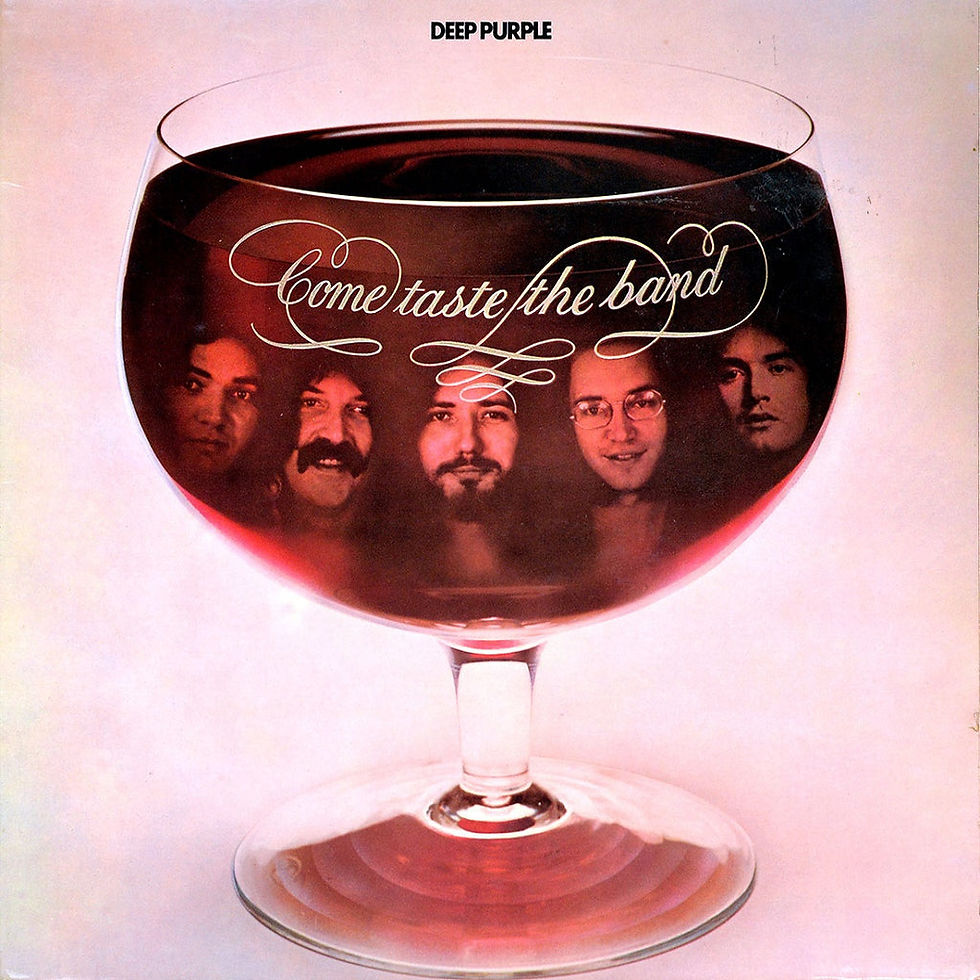
It is hard to imagine a tougher test for a young guitarist than joining a band whose audience is still waiting to hear Ritchie Blackmore. But Tommy Bolin arrived with enough ideas and talent to give "Deep Purple" a good reason to carry on. This album brims with life, rhythm and an appetite for playing. Listen without searching for the departed guitarist in every solo, and you discover just how much wonderful music this short-lived lineup left behind.
The crisis followed "Stormbringer". The soul and funk influences championed by David Coverdale and bassist and singer Glenn Hughes had taken the band away from the direction Ritchie Blackmore wanted. In 1975, he left and formed "Rainbow". Keyboardist Jon Lord and drummer Ian Paice considered calling it a day, but David Coverdale and Glenn Hughes wanted to continue. The two remaining founders now faced a double challenge, finding a guitarist who could hold his own on that stage and discovering whether the new lineup had something of its own to say.
Tommy Bolin was an intriguing choice. The American guitarist, whose previous bands included "Zephyr" and "James Gang", had already delivered dazzling playing on Billy Cobham's fusion album "Spectrum". He had speed and technique, but also a strong rhythmic feel, a blues sensibility and a knack for settling his guitar into a groove. His audition became a jam that made the chemistry clear. He did not share the band's historical baggage, and that distance gave him a freedom its veteran members were finding increasingly difficult to recover.
Recording took place at "Musicland" studios in Munich, from August 3 to September 1, 1975. Martin Birch produced the album with the band, and Ian Paice joined him for the mix. Tommy Bolin co-wrote seven of the nine tracks, mostly with David Coverdale, rather than simply adding solos to finished material. His layered guitars and effects gave the album a richer palette, while the drums retained an open sound and a natural sense of movement. Even within short, focused songs, you can hear musicians responding to one another.
That creative atmosphere did not erase the problems around them. Glenn Hughes was struggling with cocaine addiction, while Tommy Bolin's drug use would only grow worse. Once those problems reached the stage, the cost would be considerable. In the studio, at least much of the time, they managed to channel their connection into good music. The gap between the record's vitality and what followed makes listening to it all the more moving.
"Comin' Home" opens with a rush of drums and guitar, punctuated by guitar and keyboard feedback. David Coverdale sings about returning home after life on the road, while Ian Paice drives the song with that remarkable lightness that allows him to sound powerful without weighing the music down. Tommy Bolin plays bass here as well as guitar. His solo is sharp, loose and full of momentum, making the track an excellent introduction to the new lineup.
The new chemistry comes through even more clearly on "Gettin' Tighter". Glenn Hughes takes the microphone, bass and drums lock into a tight groove, and Tommy Bolin's guitar darts between them in short, syncopated phrases. The lyrics invite us to let go and lose ourselves in the music, and the performance does exactly that. Glenn Hughes can soar into the upper register, but here he also knows how to sit back on the beat and turn his voice into another instrument within the band. It is one of those moments when funk and rock come together completely naturally, with neither losing its bite.
Alongside that pleasure comes "Dealer", bringing a more unsettling dimension to the sound. Beneath the riff and melodic arrangement lies a warning about someone who sells promises and leads the buyer towards ruin. Tommy Bolin also contributes a vocal passage, lending the song a different shade from David Coverdale's delivery. It is difficult to hear the words without thinking about what the musicians were going through, but even without that knowledge, this is an excellent song whose shifts keep us on edge.
The album is uneven. There are moments when "I Need Love" relies more on the groove and David Coverdale's confidence than on a convincing melodic idea. On the other hand, "Lady Luck", which Tommy Bolin brought from his days in "Energy" and for which David Coverdale wrote new lyrics, shows how effective the band can be when it packs everything into less than three minutes.
On the second side, "Drifter" restores the grit and drive of hard rock, while "Love Child" gives Jon Lord a more prominent role. His rough-edged keyboards against Tommy Bolin's guitar remind us that the fruitful clash between the two instruments survived the Ritchie Blackmore era. It simply speaks a different musical language now. Throughout this album, Jon Lord leaves considerable room for the guitar, and when he steps forward, we understand how important his presence is even when he is not in the spotlight.
The most delicate moment arrives with "This Time Around". Jon Lord builds a soft keyboard accompaniment, and Glenn Hughes sings of fear, loneliness and the desire for another chance. After all the movement and heat, this quiet allows us to hear the vulnerability in his voice. The music then flows into "Owed to 'G'", Tommy Bolin's instrumental tribute to George Gershwin. The guitar has room to stretch its phrases and change direction, with Ian Paice's drums supplying momentum. Together, the two sections reveal another side of the lineup, sensitive and refined, with the freedom of fusion musicians.
Then comes "You Keep on Moving", the closing track that makes it worth staying until the very last note. David Coverdale and Glenn Hughes wrote it before Tommy Bolin joined, and their voices come together in a way that almost single-handedly justifies the band's decision to continue. The bass line, keyboards and guitar create a slow, almost hypnotic sense of movement, while the lyrics drift between distance, longing and the hope of meeting again. David Coverdale's deep voice and Glenn Hughes's higher register complement each other without competing for space.
The beauty of "You Keep on Moving" also lies in its restraint. Tommy Bolin is in no hurry to crowd the arrangement, and when his guitar opens up, it carries forward the emotional tension the vocals have already created. Jon Lord sustains the atmosphere, while Ian Paice knows when to add power and when to leave room to breathe. There is something of a farewell in this ending, even though the song was written before anyone knew how this chapter would end. In hindsight, it feels like one last moment when all the pieces fall perfectly into place.
Commercially, the album reached number 19 in the UK and number 43 in the United States. These were modest results compared with the band's earlier peaks, and the new sound divided its audience. The tour exposed the lineup's instability, and its final performance took place in March 1976. The band broke up, and on December 4 that year, Tommy Bolin died at the age of 25. His album "Teaser", released around the same time as "Come Taste the Band", offers another poignant glimpse of the range of possibilities that had been open to him.
The 35th anniversary edition, released in 2010, included a remaster, a new mix by Kevin Shirley and two previously unreleased instrumental tracks. It offered another opportunity to hear the details and the connection between the musicians. Even if some songs are less compelling, there are too many good ideas and outstanding performances here to dismiss the album as a mere "footnote".
For us, "Come Taste the Band" deserves a place of its own in the story of "Deep Purple". It captures an established band briefly enjoying the chance to start again, and a young guitarist who manages to bring so much of himself into it. The sadness of what followed does not erase that pleasure. It only makes us wish they had been able to do more with it.
For Listening: Spotify, Apple Music


Comments