


Stevie Wonder - Talking Book

Written by: Moti Kupfer
Release date - 27.10.1972
"If a man cannot see with his eyes, it doesn't mean he has no vision"
And what a vision he had, this child prodigy: a prodigy who became a multi-instrumentalist superstar, a gifted songwriter, a member of the Rock and Roll Hall of Fame and the Rhythm and Blues Hall of Fame, an artist who won around twenty-five Grammy Awards and an Academy Award, and who has sold over 100 million albums worldwide.
This is, of course, Stevie Wonder, whose fifteenth album, "Talking Book", was released on 27.10.1972.
Wonder, true to his name, is a musical wonder. He was born in 1950 in Saginaw, Michigan, as Stevland Hardaway Judkins.
Wonder was born a few months premature and was placed in an incubator as a preemie to receive oxygen therapy. This caused "retinopathy of prematurity": the excess oxygen reaching his eyes in intensive care led to his blindness.
When he was 4 his parents divorced, and his mother moved with her children to Detroit, where little Stevie began singing in the choir of the Baptist church.
At 9 he taught himself to play the piano, harmonica and drums, and two years later he was discovered by Ronnie White of "The Miracles". White took little Stevie and his mother to an audition with the head of "Motown", Berry Gordy.
After signing a special contract because of his young age (a five-year rolling contract in which the royalties were held in trust until he turned 21), the producer Clarence Paul gave him the name Little Stevie Wonder.
Over a decade, from 1962 to 1972, the prolific artist created no fewer than fourteen studio albums. In 1963 Wonder had his breakthrough with the first single to reach the top of the charts in the US, "Fingertips Pt. 2".
Later, as befits a teenager, little Stevie's voice changed, and he put his musical career on hold for a moment in order to study classical piano at the school for the blind in Michigan. At the same time he dropped "Little" from his name.
Wonder returned to the forefront, this time as a mature artist (though still a teenager), and began producing classics that won him more and more fans: "Uptight", "My Cherie Amour", "Yester-Me, Yester-You, Yesterday" and more.
In 1970, at just 20 years old, Wonder married Syreeta Wright, a secretary at "Motown" and a songwriter. Wonder would go on to write wonderful songs for Syreeta, and about her, but their marriage lasted only two years, while their musical collaboration was longer and more successful.
At the same time Wonder negotiated a new contract with "Motown" in which he obtained full control over his career, including an unprecedented percentage of royalties and full control over how his albums were made, in every respect.
As mentioned, from the start of the seventies Wonder and Syreeta built a shared life, musical as well. This was the moment Stevie Wonder began to "step out of the box" of "Motown"'s R&B artist, searching for new sounds and finding them in the arms of the electronic production duo "Tonto's Expanding Head Band".
Behind that name stood the British jazz musician Malcolm Cecil and the American producer Robert Margouleff, a pioneer of electronic music, which is where Stevie Wonder was headed. The collaboration between Wonder and Wright and the duo of Margouleff and Cecil began on the album "Music of My Mind", released in March 1972, and reached a first peak on Wonder's next album, released on 27.10.1972: "Talking Book".
The energetic Stevie didn't rest for a moment. Between the release of his 14th album in March and the release of "Talking Book" in October, he decided to step out of the box, and out of the niche of the Black artist, and in June 1972 he went to open for "The Rolling Stones" on their tour.
Wonder returned from that tour more mature, straight into the recording sessions for "Talking Book", a timeless classic that is all self-examination and social statements. Wonder sings about social issues and about love, and isn't afraid to touch on political subjects, as when he criticizes, in "Big Brother", the white politician who visits the ghetto only during election season.
Many musicians contributed to the album, some of them before they broke through themselves, such as Deniece Williams, David Sanborn, Ray Parker Jr., and also the guitarist Jeff Beck. Beck, who admired Wonder, got in touch with him and soon joined the album's recording sessions, with the agreement between them being that Beck would play on the recordings and in return Stevie Wonder would write him a song.
During the sessions Beck began drumming a beat, and Wonder told him to keep improvising. After they finished together and made a demo of the song, Wonder decided it would be the song he would give him as a gift: "Superstition". The release of the single in the version by Beck and his band was delayed, and "Motown" head Berry Gordy, who predicted the song would be a huge hit, pounced on the opportunity, and the song came out first in Wonder's version and indeed became a monster hit. It would take Jeff Beck a long time to forgive Stevie Wonder for that move.
Throughout the album you can feel its distinctive, edgy sound, created thanks to the two super-producers, Cecil and Margouleff. The two built layer upon layer using ARP and Moog synthesizers and keyboards such as the clavinet and the Fender Rhodes in place of the usual string instruments, which added a dimension of depth to the album's sound.
"Talking Book" became the first in a chain of classic albums that turned Wonder into a powerhouse. In the seventies alone he won 15 Grammy Awards, and his influence on music and on future artists was so great that it cannot be quantified.
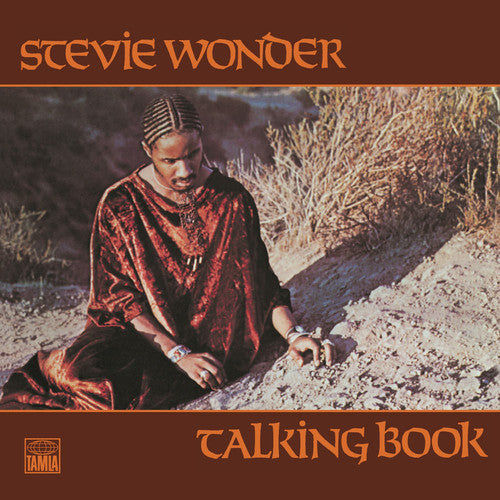
On the album cover Stevie Wonder appears with African-style braids, wearing Indian jewelry. The photograph was taken by one of the album's two producers, Robert Margouleff.
The original release included Braille lettering on the album packaging, and Stevie Wonder added a touch of his own when he wrote to the album's listeners: "Here is my music, this is what I have to say to you about how I feel. Know that your love for me strengthens my love for you even more".
For Listening: Spotify, Apple Music
"Face/Off" - Israel's Rock Blog


Comments