


Steven Wilson

On November 3, 1967, singer, guitarist, composer, and super producer Steven Wilson was born!
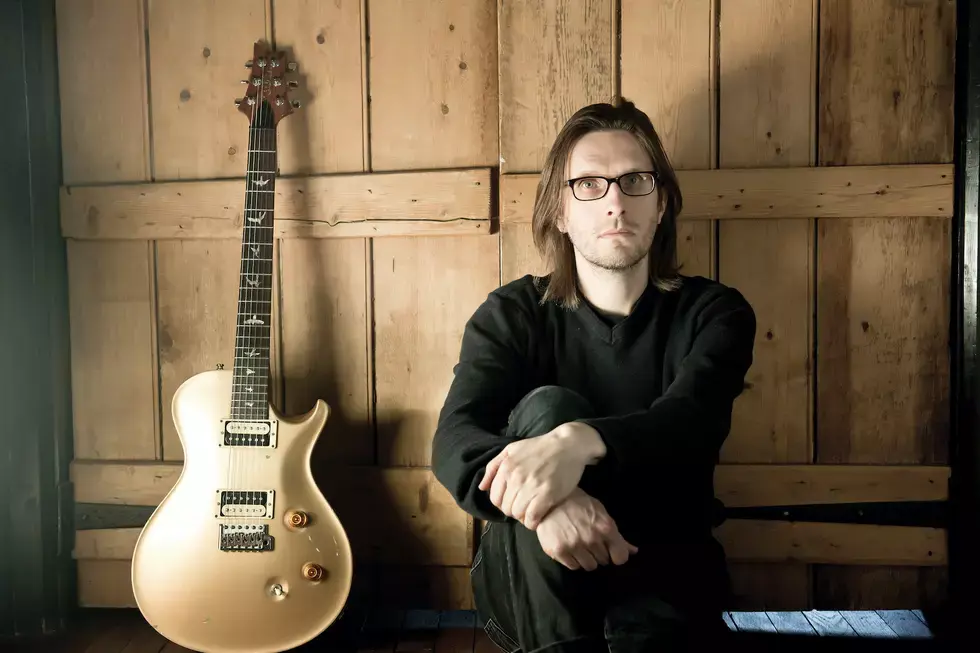
(Photo: Will Ireland)
He is the man who founded the cult band "Porcupine Tree" in his bedroom, revolutionized 21st century progressive rock, created "Blackfield" with Aviv Geffen, launched progressive metal by producing the masterpiece albums of "Opeth", and became the most sought-after sound architect in the world thanks to his historic remixes of 1970s legends. Here are 38 fascinating facts about the barefoot genius of the rock world.
1. Wilson was born Steven John Wilson in a hospital in the Kingston upon Thames district of London, and at the age of six he moved with his family to the town of Hemel Hempstead in Hertfordshire, where his musical worldview was shaped.
2. The formative musical experience of his life occurred on Christmas when he was only eight years old, when his parents gave each other two records that changed his life forever, the album "The Dark Side of the Moon" by the band "Pink Floyd" and the album "Love to Love You Baby" by disco singer Donna Summer.
3. The unexpected combination of the psychedelic and melancholic spaces of "Pink Floyd" and the hypnotic and repetitive rhythms of producer Giorgio Moroder on Summer's album instilled in the young Wilson an obsession with combining progressive rock, electronic music, and dark pop.
4. At the age of ten, his parents bought him a classical guitar with nylon strings and forced him to take music lessons, but Wilson hated formal learning and stopped taking lessons soon after.
5. At the age of just eleven, he discovered an old reel-to-reel recording device in the attic of his house, and from that moment on he began teaching himself to record layers of guitars, keyboards, and sound experiments using the ping-pong technique between two simple tape recorders.
6. Wilson's father was a talented electronics engineer, and when he noticed his son's immense passion for sound, he built for him a multi-channel mixer and an analog echo device with his own hands, which allowed the young boy to turn his bedroom into a real recording studio.
7. At the age of twelve, he formed his first band, a psychedelic duo called "Altamont" with his friend Simon Vockings, in which the two recorded long instrumental pieces on cassette tapes inspired by the spice rock band "Hawkwind" and the German electronic duo "Tangerine Dream."
8. In the early 1980s, at the same time as the new wave of British heavy metal and his infatuation with bands like "Iron Maiden", Wilson joined the neo-classical prog band "Karma", with whom he recorded two albums that were released on cassette only and combined influences from "Marillion" and the band "Rush".
9. In 1986, he teamed up with singer-songwriter Tim Bowness to form the duo "No-Man", which began under the name "No Man Is An Island (Except The Isle Of Man)", a project that combined art pop, dream pop, synth pop and melancholic dance rhythms and won a prestigious recording contract with One Little Indian.
10. In 1987, out of boredom and a shared private joke with his old friend Malcolm Stocks, the two decided to invent a lost psychedelic rock band from the 1970s that never existed, to which they gave the name "Porcupine Tree."
11. The two went too far with the hoax and wrote an entire booklet that included a completely fabricated biography of the fictional band, stories of encounters at a rock festival in the 1970s, police arrests, and names of fictitious musicians like Sir Tarquin Underspoon and The Expanding Flan.
12. To back up the joke with real music, Wilson recorded hours of psychedelic music alone in his room and released underground tapes, which were sent to British magazines and received rave reviews from journalists who believed it was a real band.
13. In 1992, "Porcupine Tree" released its official debut album, "On the Sunday of Life...", an album composed of Wilson's home recordings and including the long psychedelic track "Radioactive Toy," which became the project's first underground classic.
14. That same year, Wilson released the monumental work "Voyage 34", a thirty-plus minute piece that documented an LSD-induced hallucinatory journey combined with trance rhythms and David Gilmour-style guitar solos, which despite its unimaginable length spent six weeks on the NME magazine's British indie chart.
15. In December 1993, as demand for live performances increased, Wilson turned the solo project into a real band and added keyboardist Richard Barbieri from the legendary new wave band "Japan", bassist Colin Edwin and drummer Chris Maitland.
16. With the release of their third album, "The Sky Moves Sideways" in 1995, the British music press crowned "Porcupine Tree" as the band that continues the path of "Pink Floyd", a title that Wilson strongly rejected out of a strong desire to escape the shadow of his childhood heroes and create an independent identity.
17. Despite his image as a prophet of modern progressive rock, Wilson never considered himself a pure prog artist and stated over the years that the artists who influenced him most in building albums and creating a cinematic atmosphere were Prince, the band "ABBA", the singer Joni Mitchell, producer Trent Reznor of the band "Nine Inch Nails" and the band "Radiohead".
18. In the late 1990s, Wilson formed two extreme side projects, the "Bass Communion" project, which was entirely dedicated to ambient music, drone, and electronic noise experiments from field recordings, and the wild krautrock and avant-garde project "I.E.M.", which was recorded in a completely improvised atmosphere.
19. On the albums "Stupid Dream" from 1999 and "Lightbulb Sun" from 2000, Wilson led "Porcupine Tree" to write tighter, more melodic and emotional songs with rich vocal harmonies and string arrangements, a move that paved the way for the band's international breakthrough.
20. The dramatic turning point in Wilson's career occurred in 2000 when he was accidentally exposed to the album "Still Life" by the Swedish progressive death metal band "Opeth", an album that amazed him with its musical depth and reignited his love for heavy, aggressive sounds.
21. The band's lead singer and leader Mikael Akerfeldt contacted Wilson, who was his childhood idol, and the meeting gave birth to the legendary 2001 album "Blackwater Park", which Wilson produced, mixed, played guitars and keyboards on, and sang the iconic background vocals on the song "Bleak".
22. The historic partnership with Akerfeldt continued on the follow-up albums "Deliverance" from 2002 and "Damnation" from 2003, where Wilson contributed significantly to shaping the sound and even wrote the lyrics to the chilling ballad "Death Whispered a Lullaby".
23. The mutual influence of his work in the metal world and the addition of super drummer Gavin Harrison led in 2002 to the release of "Porcupine Tree's" masterpiece album, the album "In Absentia", which featured heavy, complex riffs alongside fragile melodies in immortal songs like "Blackest Eyes", "Trains" and "The Sound of Muzak".
24. In the early 2000s, Israeli musician Aviv Geffen heard the music of "Porcupine Tree", fell in love with its sound and invited the band to perform in Israel in 2000, a meeting that led to a deep friendship and a rare artistic connection between the two.
25. In 2001, Wilson and Geffen formed the band "Blackfield", a British-Israeli supergroup that released their masterful debut album "Blackfield" in 2004, which included melancholic and emotional classics such as "Pain", "Blackfield" and "Hello", alongside a reworked English version of Geffen's song "Cloudy Now".
26. Wilson's connection to Israel became particularly deep and personal, and during the 2000s he even lived for a period in Tel Aviv to record and create with Geffen the successful follow-up album "Blackfield II", released in 2007, and continued to perform in Israel dozens of times even when other international artists avoided doing so.
27. In 2005, Porcupine Tree released the album "Deadwing", which was based on a surreal and chilling film script written by Wilson with Danish director and cinematographer Lasse Hoile, and included the twelve-minute prog epic "Arriving Somewhere but Not Here" and a guest appearance by guitarist Adrian Belew of "King Crimson".
28. In 2007, the concept album "Fear of a Blank Planet" was released, inspired by the novel Lunar Park by author Bret Easton Ellis and dealing with technological alienation, attention deficit disorder, and depression among teenagers in the twenty-first century. This album earned Wilson his first Grammy nomination in the Best Surround Sound Mixing category and featured guitarist Alex Lifeson from the band "Rush" on the central track "Anesthetize".

(Photo: Lilly M)
29. One of Wilson's famous and inseparable hallmarks throughout his career is performing on stage completely barefoot, a custom that was born for a practical reason, as he says this way he can feel the pedal presses on his huge effects panel better and more accurately, and also out of his love from a young age to walk around without shoes.
30. In 2008, Wilson officially launched a solo career under his full name with the album "Insurgentes," which was accompanied by a documentary film that featured a memorable scene in which Wilson smashes iPods with a heavy hammer, a shotgun, and a fire extinguisher as a protest against the compression of music into poor MP3 files that destroy the listening experience.
31. In 2009, he led "Porcupine Tree" to the album "The Incident," which ended with a historic, huge performance at the Royal Albert Hall in London in 2010, after which the band went on a twelve-year hiatus so that Wilson could devote himself entirely to his solo career.
32. In addition to his original work, Wilson became the most sought-after sound architect in the rock world thanks to his historic remix projects in stereo, 5.1 surround and Dolby Atmos formats, with artists such as Robert Fripp of "King Crimson" and Ian Anderson of "Jethro Tull" entrusting him with the original master reels of the masterpiece albums "In the Court of the Crimson King" and "Aqualung", alongside masterful works he did for "Yes", "Gentle Giant", "Emerson, Lake & Palmer", "Roxy Music", "Tears for Fears", "XTC" and "Black Sabbath".
33. In 2012, he reunited with his good friend Mikael Akerfeldt from the band "Opeth" to form the avant-garde duo "Storm Corrosion", a project that surprised the two's metal fans when it completely abandoned drums and distorted guitars in favor of an acoustic, orchestral, and dark work that drew influences from the band "Talk Talk" and film soundtracks from the 1970s.
34. In 2013, he released his third solo album, "The Raven That Refused to Sing (And Other Stories)," recorded in Los Angeles with legendary sound engineer Alan Parsons and a supergroup that included guitarist Guthrie Govan and drummer Marco Minnemann. The album was dedicated to ghost stories and included the masterful ballads "Drive Home" and "The Raven That Refused to Sing."
35. In 2015, he released his masterpiece "Hand. Cannot. Erase.", a moving concept album inspired by the true tragic case of Joyce Carol Vincent, a young London woman who died in her apartment while her television was on and her body was discovered only three years later without anyone noticing her disappearance, an album in which he hosted Israeli singer Ninet Taib who performed a powerful vocal role in the songs "Routine" and "Ancestral".
36. Singer Ninet Taib collaborated with him again in 2017 on his fifth solo album "To the Bone", which reached number three on the official UK Albums Chart and included the successful duet "Pariah" alongside sparkling pop tributes to the bands "ABBA" and "Talk Talk", and in September 2019 he closed an exciting personal circle when he married his Israeli sweetheart Rotem, to whom he dedicated songs and later also published his autobiography Limited Edition of One in 2022.
37. In 2022, he surprised the music world when he secretly reunited "Porcupine Tree" with Richard Barbieri and Gavin Harrison to release the album "Closure / Continuation", which was secretly recorded over a decade, jumped straight to second place in the British charts and led to a massive world tour, after which he released his ambitious seventh solo album "The Harmony Codex" in September 2023.
38. In March 2025, Wilson returned to his progressive rock and space roots with his eighth solo album "The Overview", a concept album consisting of two huge twenty-minute works each, "Objects Outlive Us" co-written with Andy Partridge of the band "XTC" and the theme track "The Overview" in which his wife Rotem also participates in a narration segment, an album that accompanied an extensive world tour in 2025 and 2026 and the live album "Impossible Tightrope: Live in Madrid".
Whether he's dismantling and reassembling the boundaries of progressive rock, reviving 1970s masterpieces in the studio, or writing melancholic anthems that pierce the heart, Steven Wilson continues to stand at the forefront of world music as one of the most innovative, prolific, and uncompromising creators of our generation.
"Face/Off" - Israel's Rock Blog


Comments