


Sonic Youth - Daydream Nation

On October 18, 1988, "Daydream Nation", the fifth studio album by the band "Sonic Youth", was released.
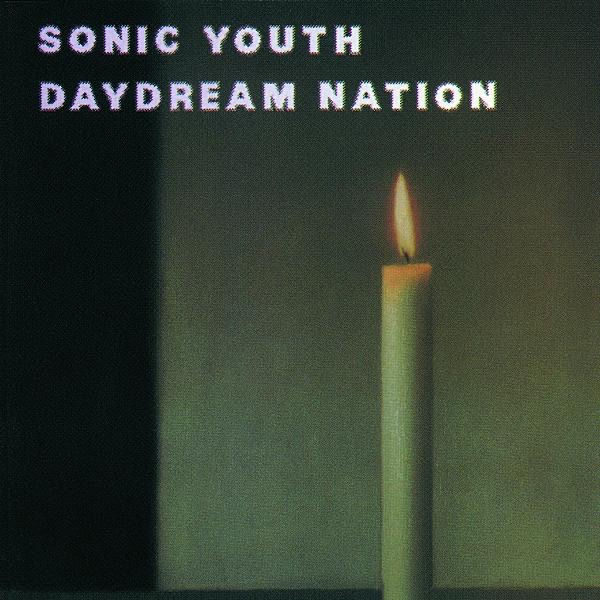
In the late 1980s, American independent music was simmering beneath the surface, but it still needed a monumental work that would bridge the gap between New York's underground avant-garde and the broad-based power of rock. The New York quartet "Sonic Youth", consisting of guitarists and vocalists Thurston Moore and Lee Ranaldo, bassist and vocalist Kim Gordon, and drummer Steve Shelley, had already established a respectable position for itself in the noise rock and no-wave scene with groundbreaking albums like 1986's "EVOL" and 1987's "Sister." But in the summer of 1988, after parting ways with the independent punk label SST Records due to management differences and signing with Enigma Records, the band decided to go all-in and create an ambitious, uncompromising double album that would forever change the face of alternative rock.
In July and August 1988, the band entered Greene St. Recording Studios in the SoHo neighborhood of Manhattan, a studio that was at the time associated with hip-hop pioneers such as Public Enemy and Run-D.M.C. Alongside sound engineer and co-producer Nicholas Sansano, who came from the world of hip-hop and brought with him a fresh approach of acoustic depth, sharp frequency separation, and powerful drum emphasis, "Sonic Youth" managed to capture the full physical power of their live performances for the first time. With a budget of only thirty thousand dollars, high by the band's independent standards up to that time, Moore and Ranaldo composed mesmerizing guitar symphonies based on dozens of unconventional alternate tunings, controlled feedback, and the use of screwdrivers and drumsticks on the strings, while Shelley and Gordon provided a driving and dynamic rhythmic anchor that transformed the pure noise into an addictive melody.
The album opens with one of the greatest and most recognizable anthems of alternative rock ever, "Teen Age Riot." The song begins with a dreamy, hypnotic opening section where Kim Gordon recites stream-of-consciousness lines in her bewitching, indifferent voice, before Thurston Moore and Lee Ranaldo's melodic, dizzying guitar riffs burst forth at an unstoppable gallop. Moore's lyrics imagine an alternate reality in which indie hero and guitarist J Mascis of Dinosaur Jr. is elected President of the United States and leads a cultural youth rebellion against the conservatism of the late Reagan era.
Immediately after the euphoric opening, the album changes direction sharply with "Silver Rocket," a dizzying, lightning-fast punk-noise attack in which Moore screams over a spiky guitar riff, only to disintegrate mid-song into a storm of feedback and chaotic white noise that miraculously re-forms in the final verse. In contrast, "The Sprawl" the long, dark, taking its name and inspiration from author William Gibson's cyberpunk books and Denis Johnson's suspense novel, showcases Gordon at her best as she paints a bleak portrait of the disintegration of American suburbia over a slow groove and wailing guitars that last for more than seven minutes of intoxication.
The album's second side continues to deepen the tension between melodic beauty and avant-garde sloppiness. The song "'Cross the Breeze" features one of Kim Gordon's most powerful and charged vocal performances, ranging from an intimate whisper to a strangled scream over sharp, alternating riffs. It is followed by "Eric's Trip", where Lee Ranaldo takes the vocal reins and poetically recounts a psychedelic journey inspired by an Andy Warhol film, and immediately follows "Total Trash", a seven-and-a-half-minute epic of endless guitar groove that demonstrates how the band can take a simple melodic motif and transform it into a sweeping electric trance journey.
The third part of the double album features "Hey Joni", an energetic and stormy tribute performed by Ranaldo that combines the rock and roll spirit of Bo Diddley with the beatnik writing of William Burroughs and Joni Mitchell, and the strange collage piece "Providence", which consists of a real voice message recording left on Moore's answering machine by their legendary bassist friend Mike Watt, against a backdrop of a distant piano and an overheating guitar amplifier. Immediately following comes "Candle", one of the most sensitive, melodic and accessible songs on the album, featuring delicate and precise guitar playing between Moore and Ranaldo and melancholic vocals that balance the intensity of the piece, alongside the sweeping "Rain King" in which Ranaldo returns to the forefront.
The fourth and final side opens with Gordon's short and cheeky "Kissability," which takes a cynical and exploitative look at the entertainment and film industries, and leads to the album's signature highlight, a monumental fourteen-minute trilogy consisting of three connected chapters, "The Wonder," "Hyperstation," and "Eliminator Jr.". This piece embodies all the elements that made "Sonic Youth" a one-of-a-kind band, from the gradual build-up of nocturnal urban tension, through a hypnotic psychedelic levitation in the darkened studio, to the violent and thunderous final outburst that draws inspiration from "ZZ Top" and brings down the studio walls.
The album cover has also become a cultural icon in its own right. The band chose the famous 1983 oil painting "Kerze," German for candle, by the esteemed German artist Gerhard Richter. The realistic, minimalist painting of a lone candle burning in the darkness gave the album an aura of high art and perfectly reflected the fragile light that shimmers from the darkness of urban distortion and alienation.
Upon its release, "Daydream Nation" received overwhelming acclaim from music critics around the world, was voted album of the year and ranked at the top of the most important magazines' decade charts. Although its initial release suffered from logistical difficulties with Enigma, the album paved the way for the band to be signed to the major record company "Geffen" under the sub-label "DGC", a historic move thanks to which "Sonic Youth" convinced the record company to sign a young band from Seattle called "Nirvana" and release "Nevermind". In 2006, the album was selected by the United States Library of Congress for preservation in the National Recording Registry for its cultural and historical significance. In the face of the test of time, "Daydream Nation" remains the absolute pinnacle of American alternative rock in the 1980s, a spectacular roadmap that proved that noise, experimentation and avant-garde art could become the timeless anthem of an entire generation.
For Listening: Spotify, Apple Music
"Face/Off" - Israel's Rock Blog


Comments